
Brilliant Upselling Techniques to Boost Revenue on Every Sales Call
Upselling is about helping customers choose a better, more useful version of what they already want — in a way that feels natural, relevant, and genuinely helpful rather than pushy. Done well, it increases revenue, customer satisfaction, and long-term loyalty.
Some of the most effective upselling techniques include tiered pricing, positioning premium plans as the default recommendation, offering upgrades after customers see value, feature-by-feature comparisons, using peer adoption examples, timing offers during key decision windows, and recommending upgrades based on customer usage data.
A sales call can completely change direction in under 30 seconds. A customer comes to buy one subscription. They leave with a yearly plan, onboarding support, priority access, and extra seats added before payment even processes. Same customer. Same budget. The difference comes from upselling techniques that flow with the talk instead of sounding like a planned pitch.
That is exactly what we are going to make simple for you. We will give you 7 upselling techniques that extend conversations intelligently rather than rushing toward the fastest possible close.
What Is Upselling?
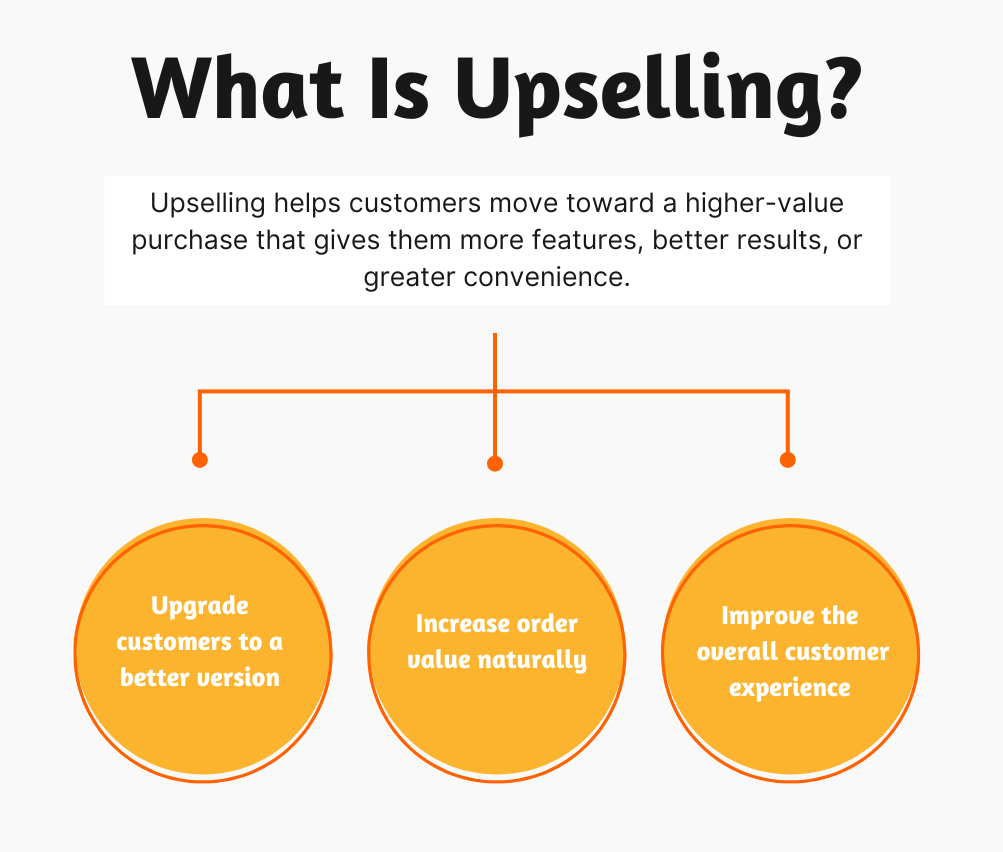
Upselling is a powerful sales technique where you entice customers to buy a higher-value version of what they already want or add something that improves their purchase. The goal is to boost sales while still giving the customer something more useful or more convenient.
There are two common forms of upselling:
- Upgrade Upselling: Persuading customers to choose a better or more advanced version of the same product or service.
- Add-On Upselling: Suggesting extra products, advanced features, or services that improve the original purchase.
Cross-Selling vs Upselling: Understanding The Key Differences
People throw upselling and cross-selling into the same bucket all the time. Before you start using either one properly, you need to see how each changes the direction of the sale in a completely different way.
| Upselling | Cross-Selling | |
|---|---|---|
| Core idea | Encourage customers to buy a higher-value version of the same product | Suggesting related or complementary products |
| Focus | Upgrade the original choice | Expand the overall purchase |
| Customer Goal | Get a better or more advanced version | Complete or enhance the main purchase |
| Example | Choosing a premium smartphone instead of a basic model | Buying a phone case or charger with a smartphone |
| Timing | During product selection or checkout | Before, during, or after the main purchase |
| Impact on Order | Increases the value of a single item | Adds extra items to the cart |
| Primary Benefit | - Better features | - Convenience |
| Sales Strategy | Shift the customer to a higher tier to increase sales | Add additional relevant products |
Why Smart Upselling Techniques Matter More Than Ever: 5 Key Benefits
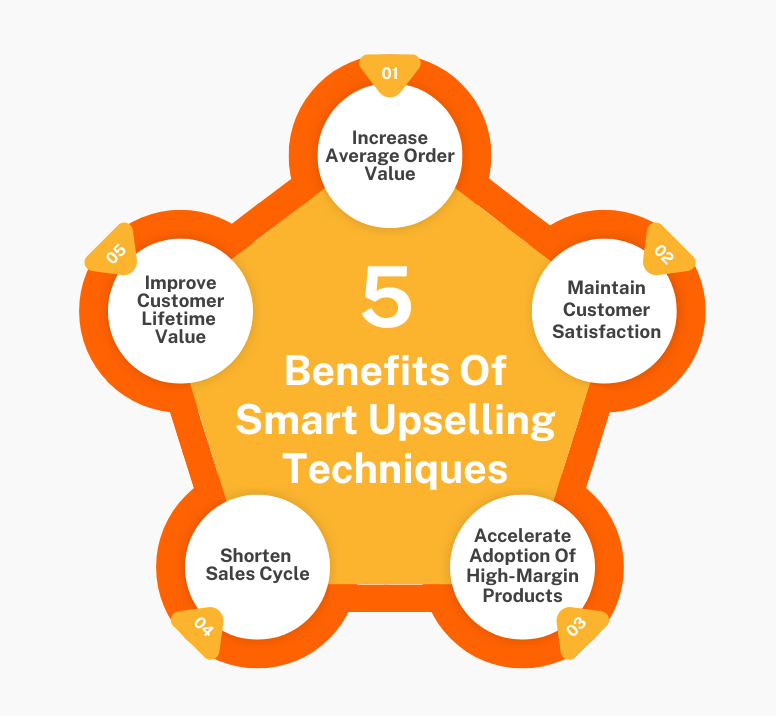
Here are 5 benefits that show why upselling techniques have become a core part of modern sales conversations.
1. Increase Average Order Value Per Transaction
Most customers are already open to spending a little more once they have decided to buy. Smart upselling takes advantage of that exact moment… but without making the interaction salesy.
A customer choosing the basic cloud storage plan, for instance, may upgrade to the business tier after seeing that the slightly higher price plan includes advanced permissions and larger file limits. They are not buying something different. They are simply choosing a more valuable version of the same solution.
That is what increases average order value. Not random product pushing - relevant suggestions that naturally fit the original purchase. And because the customer is already in decision mode and okay with the numbers, businesses grow revenue without spending extra money trying to attract another buyer.
2. Maintain Customer Satisfaction Through Relevant Add-ons
Bad upselling annoys people. Good upselling actually improves the customer experience.
Booking a hotel room and immediately being offered early check-in after a long-haul flight isn’t an unnecessary add-on. It is helpful because it solves a problem before the customer even has to ask.
That is why relevance matters so much. When recommendations genuinely make the customer’s life easier, the business doesn’t look transactional. And customers remember that kind of convenience. Enhancing customer satisfaction and customer retention becomes easier because it all just works from the start, instead of turning into small issues later.
3. Accelerate Adoption Of High-Margin Products
Some of the most profitable products businesses offer are also the hardest to sell on their own. Customers usually ignore premium features when they are presented separately with no context.
Upselling changes that.
For example, someone buying project management software may skip advanced reporting tools during initial research. But when those same tools are recommended during checkout with a clear explanation, the value suddenly becomes obvious.
Rather than being an “extra,” the product becomes connected to the reason they were buying in the first place. That is why smart upselling is such an effective way to increase adoption of higher-margin services without heavy discounts or aggressive sales tactics.
4. Shorten Sales Cycle Through Targeted Recommendations
Too many choices slow new customers down. In many cases, buyers delay decisions simply because they are unsure what they actually need.
Targeted upselling efforts remove that uncertainty. For example, a growing online store looking at a standard subscription plan may immediately recognize they need the advanced tier once they see higher automation limits and multi-user access. The decision becomes faster because the recommendation has already narrowed the options intelligently.
This matters a lot in industries where customers can easily get overwhelmed by technical details or configuration choices. The more clearly businesses take people toward the right add-ons, the less hesitation there is during the buying process… and shorter sales cycles usually follow.
5. Improve Customer Lifetime Value
No, customer lifetime value doesn’t rise just because someone spends more once. It rises when each purchase changes what they expect next time. Smart upselling creates that shift by introducing upgrades that actually get used.
An existing customer who moves from a basic analytics tool to an advanced insights tier with predictive dashboards starts relying on those insights in daily decisions. That dependency is what changes behavior and increases customer loyalty over time.
Future purchases become easier because the customer is building on a system they already trust and use. Each upsell becomes a next step rather than a one-off increase. And that is how customer relationship and lifetime value grow - by increasing how embedded the product becomes in the customer’s workflow.
7 Upselling Techniques To Increase Deal Size & Earn More From Every Customer
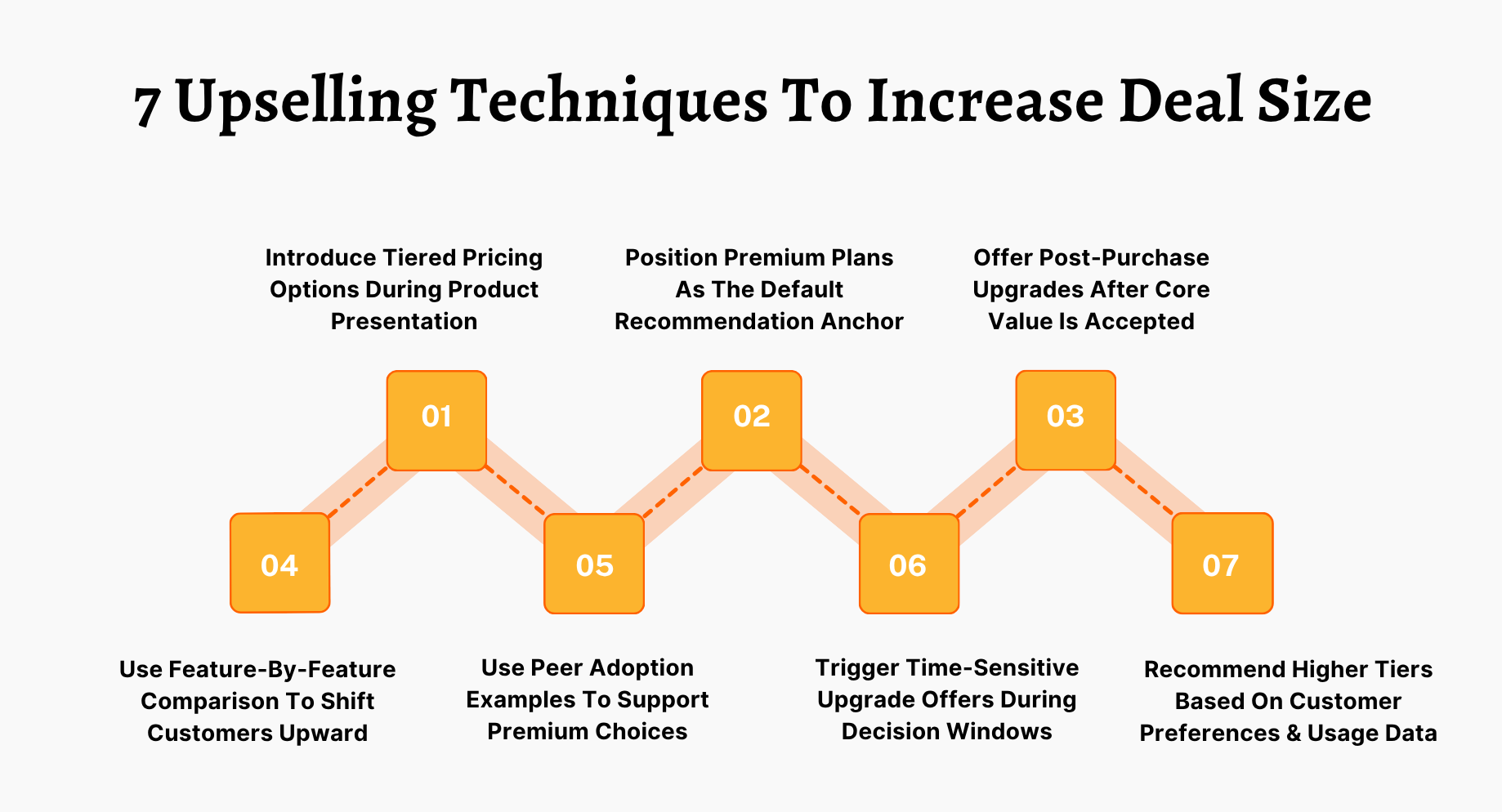
Here are 7 effective upselling techniques you can use to naturally increase deal size without changing the tone of your sales call.
1. Introduce Tiered Pricing Options During Product Presentation
A single pricing option forces customers into a yes-or-no decision. Tiered pricing changes the conversation completely. Now the customer is comparing levels of value instead of deciding whether to buy at all.
And interestingly, most people don’t just go for the cheapest option when they can see what the higher plans give them. If the jump is practical, customers upgrade on their own without you having to say much.
The mistake most businesses make is building tiers around random features. Customers don’t care about feature piles. They care about what becomes easier or less limiting at the next level.
Do This:
- Rename plans around customer situations, not generic labels like Silver or Gold. “Starter,” “Scaling,” and “Multi-Team” immediately create context.
- Keep the pricing jump believable. Going from $49 to $399 too early kills upward movement.
- Mention what changes operationally at each tier: approval workflows, reporting depth, automation volume, response speed, storage flexibility.
- During sales demos, pause slightly longer on mid-tier and premium capabilities instead of rushing through them equally.
2. Position Premium Plans As The Default Recommendation Anchor
Customers take cues from presentations more than companies think. If your cheapest plan visually dominates the page, most buyers assume that is the “safe” choice. But when the premium option is framed as the normal recommendation, customer psychology shifts in a different direction.
Now the question becomes: “Do I need to downgrade from the recommended setup?”
That framing matters because people naturally avoid feeling under-equipped, especially in business purchases.
Do This:
- Put the premium product in the center of pricing layouts. Don’t hide it on the far right.
- Use grounded labels like “Chosen by teams handling high client volume” instead of dramatic phrases like “Ultimate Plan.”
- Have sales reps start by discussing how customers typically use the premium version for long-term benefits and cost savings.
- Reduce visual emphasis on entry-level plans by simplifying their descriptions rather than over-explaining them.
3. Offer Post-Purchase Upgrades After Core Value Is Accepted
The easiest upselling opportunities happen right after the customer starts trusting the product. Before purchase, people are cautious. After they have seen results, their buying mindset changes completely. They stop evaluating whether the product works and start thinking about how far they can push it.
A customer who just automated their first reporting workflow is way more open to an advanced analytics tool than someone still deciding whether to sign up at all.
Do This:
- Wait until the customer completes one meaningful success action before showing upgrade prompts.
- Trigger upgrade messaging immediately after customers hit a limit instead of days later when the frustration fades.
- Phrase upgrades as continuity improvements like “avoid interruptions” or “unlock faster processing,” not “buy more.”
- Pre-fill upgrade settings automatically so the customer feels like they are continuing the setup.
4. Use Feature-By-Feature Comparison To Shift Customers Upward
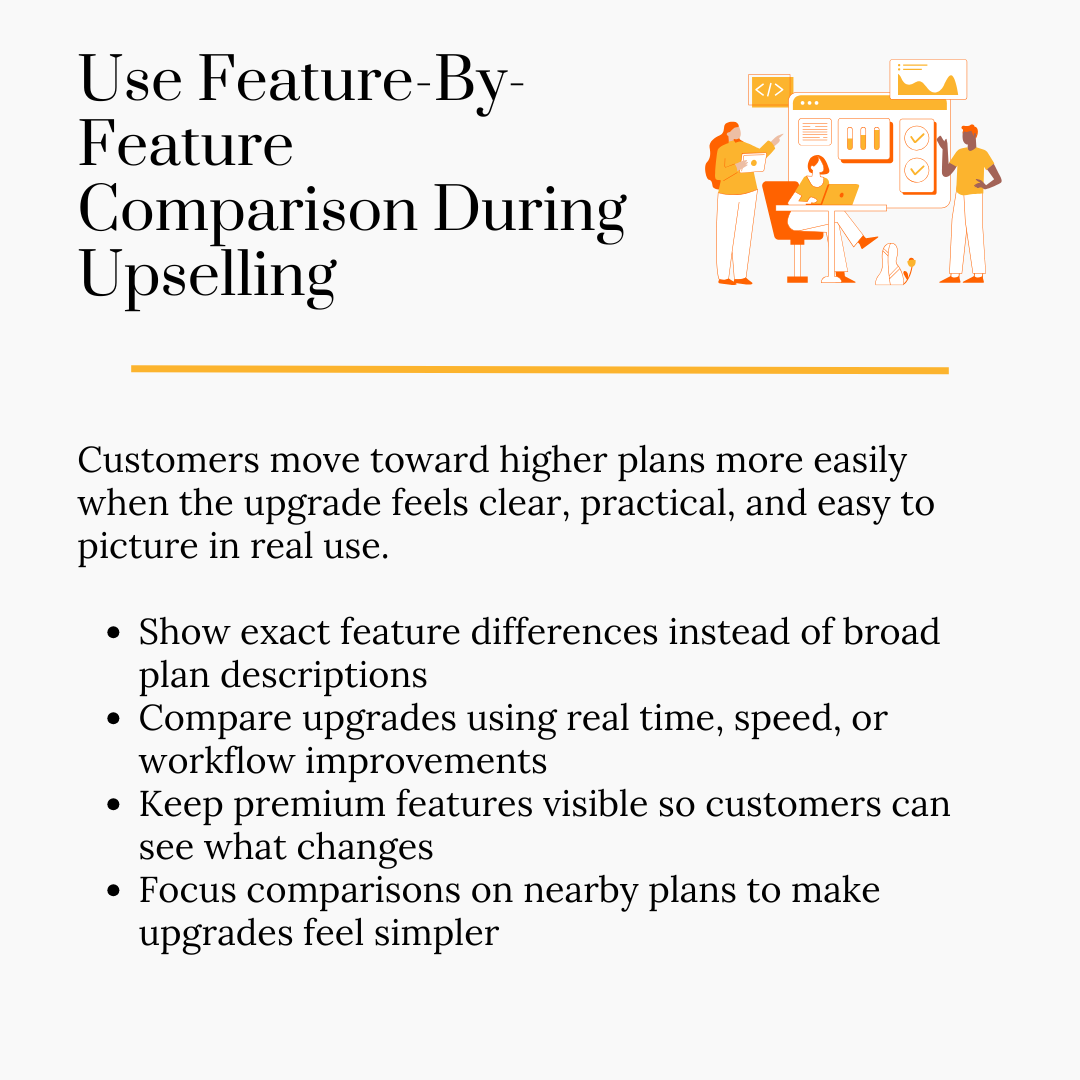
A poorly defined upgrade almost never works. Customers need to physically see what changes between versions. “Advanced tools” could mean anything. But “custom approval chains” or “unlimited client dashboards” immediately creates a picture that people can evaluate properly.
Specificity is what moves upgrades. Customers respond faster when they can clearly identify the exact moment a higher-tier feature would become useful in their day-to-day work.
Do This:
- Compare plans using outcomes like “Exports in 2 minutes vs 15 minutes.”
- Grey out unavailable premium features instead of hiding them entirely.
- Put the strongest upgrade difference first because customers rarely read full comparison tables carefully.
- Use side-by-side comparisons only for adjacent plans. Too many columns weaken upward movement.
5. Use Peer Adoption Examples To Support Premium Choices
People copy purchasing behavior constantly… especially when they are uncertain. When buyers hear that companies at a similar stage chose the higher tier for very specific reasons, the decision becomes safer and socially validated. But generic social proof is weak. “Thousands of customers trust us” doesn’t get upgrades. Specific adoption examples do.
Do This:
- Mention upgrade patterns tied to business stage, like “Most teams upgrade after onboarding their fifth employee.”
- Use examples based on workload volume, not company size alone.
- Include the exact trigger that caused other customers to upgrade.
- Show progression stories where customers started small and moved upward later instead of jumping directly to enterprise-level examples.
6. Trigger Time-Sensitive Upgrade Offers During Decision Windows
Upsell timing matters more than upsell wording. There are small windows where customers become unusually open to spending more: during checkout, right after customization, after seeing projected results, while actively comparing versions.
Miss those windows, and the same offer becomes intrusive instead of helpful. The goal here is momentum capture during the customer’s initial purchase. You are engaging the customer while their buying energy is already active.
Do This:
- Trigger upgrade offers during plan configuration, not after checkout confirmation emails.
- Offer temporary onboarding bonuses tied specifically to upgrading now. No vague discounts.
- Use urgency around operational advantage, like “priority setup access ends tonight” instead of generic countdown pressure.
- Remove every unnecessary click during the upgrade flow because hesitation increases dramatically with each extra step.
7. Recommend Higher Tiers Based On Customer Preferences & Usage Data
This is where upselling starts becoming an advice. If customers are constantly hitting reporting caps or nearing automation limits, they already understand the need internally. The recommendation simply formalizes it. That is why upselling based on customer data converts so well. The recommendation becomes earned.
Do This:
- Trigger upgrade prompts based on repeated behavior patterns, not one-time spikes.
- Deploy the OKRs Tool to track expansion signals like feature adoption, usage spikes, and upgrade readiness so sales teams can recommend higher tiers at the right moment.
- Tie upgrades to operational continuity, like preventing slowdowns or interruptions.
- Send upgrade recommendations immediately after peak usage moments while the limitation is still real.
4 Real Businesses That Built Revenue Growth On Strong Upselling Techniques
Some companies build serious revenue growth by using successful upselling strategies smartly. Here are 4 real businesses doing exactly that in day-to-day sales conversations.
1. Mannequin Mall
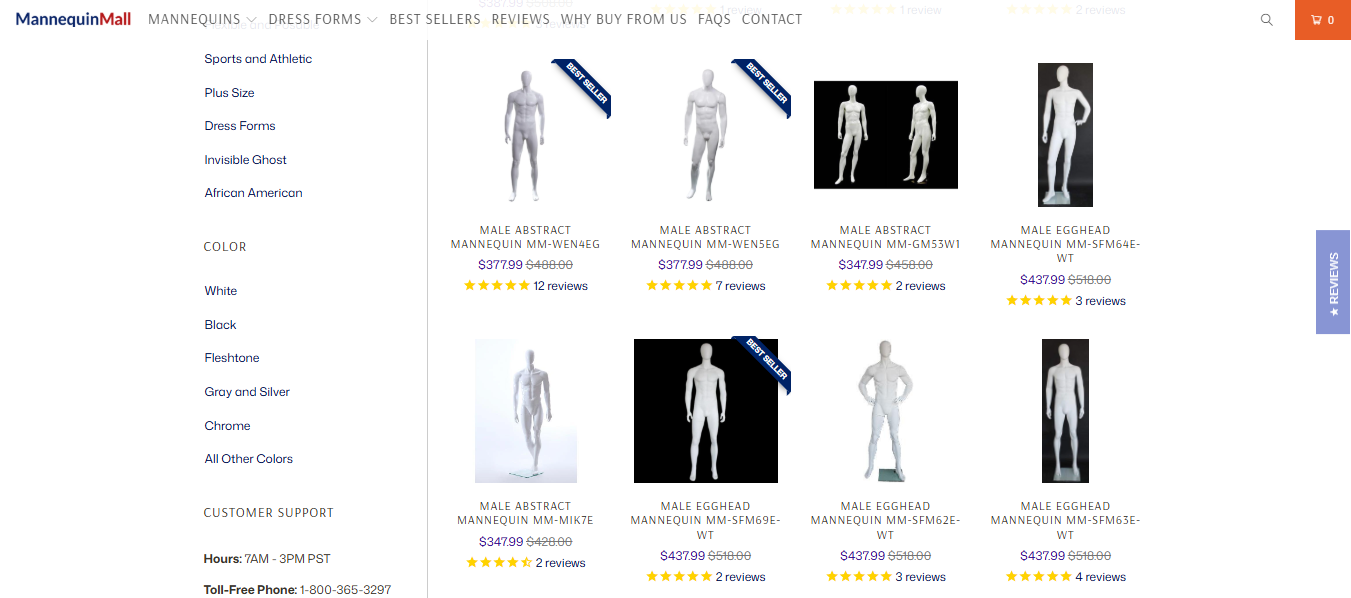
The upselling strategy of Mannequin Mall works because they understand something very specific about retail buyers: nobody buys a mannequin just to own a mannequin. They buy it to complete a visual setup inside a store, trade show booth, showroom, or product photography environment.
That changes the entire sales conversation.
Instead of pushing unrelated products, they increase order value by moving customers from entry-level fiberglass mannequins toward more premium visual merchandising pieces with better finishes, detachable limbs, stable metal bases, or higher-end posture designs that photograph better under retail lighting.
The smart part is how visual the upgrade path feels.
A customer comparing a matte white mannequin against a polished chrome-finish athletic pose instantly sees why the higher-priced option changes storefront perception. That is a strong upselling technique because the higher-tier product changes the customer’s outcome, not just the invoice amount.
You can also see the upsell structure in how pose categories are separated. Static standing mannequins solve a basic display problem. Dynamic walking poses or luxury-style fashion poses solve branding and attention problems. That pushes the buyer into a completely different decision category.
The same pattern shows up with bulk buyers. Retail chains opening multiple locations are pushed toward stronger commercial-grade mannequins with reinforced bases and easier assembly systems because operational convenience matters more at scale than initial price.
The result is a much larger average order value without making the sales process feel aggressive.
2. Performance Lab
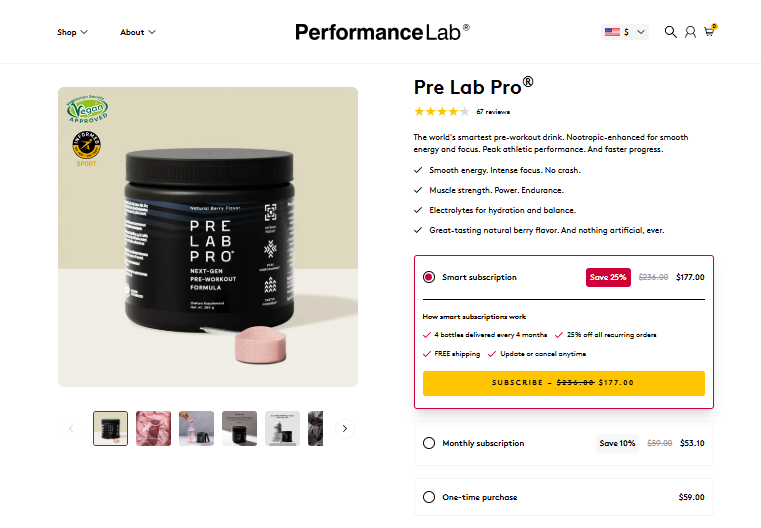
Performance Lab’s Pre Lab Pro uses pricing structure as part of the upsell itself, which is something many supplement brands completely miss. Instead of giving customers only a flat one-time purchase option, they create multiple commitment levels that naturally push buyers upward.
A customer can buy Pre Lab Pro once and stay casual with the purchase. But the moment they start thinking long-term about workout consistency, the monthly subscription immediately becomes more attractive because it lowers the cost by 10%.
Then there is the Smart Subscription option with even deeper 25% savings for customers ready to make performance supplementation part of their ongoing routine.
That changes the psychology of the sale in a big way. The upsell no longer feels like “spend more money.” It becomes “reduce long-term cost while staying consistent.” Those are two completely different buying emotions.
Someone originally planning to test one container starts calculating what they spend across three or four months of training. Once the savings gap becomes visible, the higher-commitment option becomes more practical.
That is a very strong upselling technique because it upgrades customer commitment level, purchase frequency, and lifetime value all at once without changing the core product itself.
3. Nootropics Depot
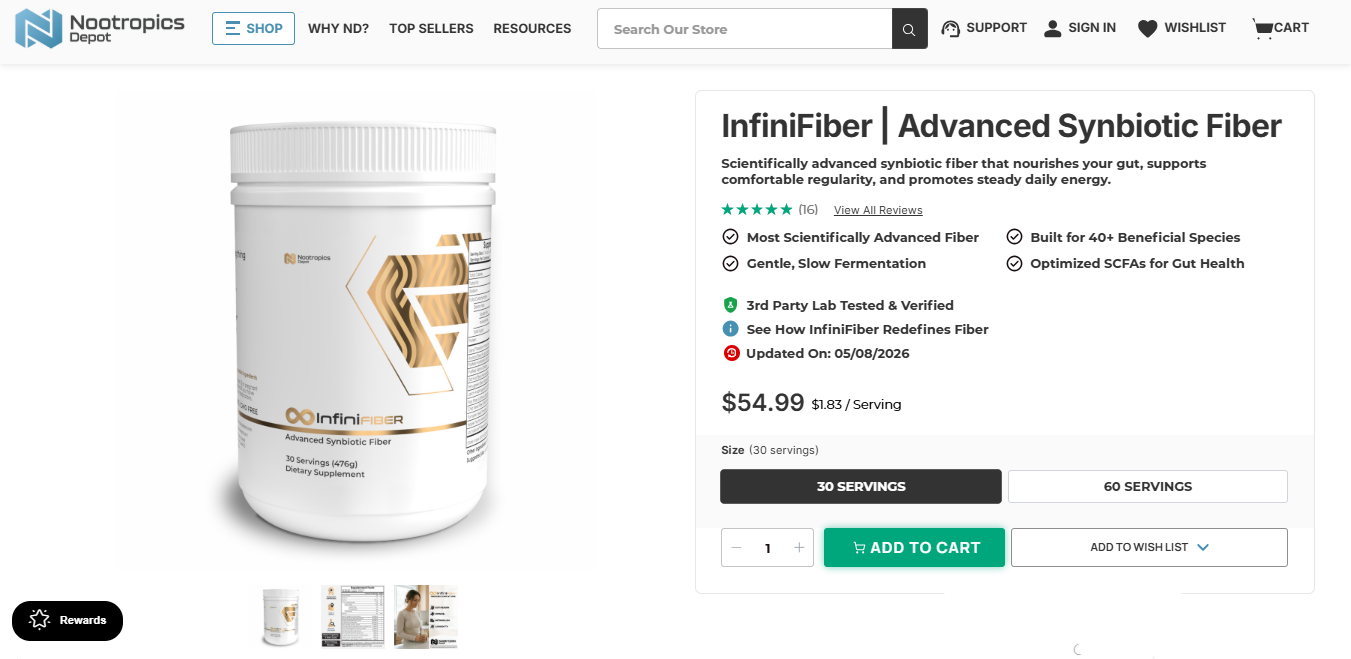
Nootropics Depot’s top-selling supplements have one of the most sophisticated upselling environments because their customer base already arrives highly research-focused. That behavior creates ideal conditions for premium upselling.
Everything at Nootropics Depot is technical and measured. Once customers start trusting that level of detail, they become far more open to upgrading.
One particularly smart upselling move appears in how many of their top-selling products are structured around 30-serving and 60-serving options. Customers immediately see that the larger format significantly reduces cost per serving, which changes the buying psychology fast.
That structure works extremely well with research-heavy supplement buyers because these customers already expect to test compounds consistently over time. The 60-serving format feels more like committing properly to a supplement protocol. The company does not need aggressive persuasion because the cost-saving math already pushes the upsell naturally.
The “Top Sellers” environment strengthens this even more because customers instantly see patterns of community trust and repeat purchasing behavior. Products start carrying momentum before the customer fully understands them.
Their educational positioning makes the entire upsell structure unusually natural because customers believe they are upgrading based on understanding rather than persuasion. That distinction matters a lot in supplement categories where trust heavily influences purchase size.
4. Brondell
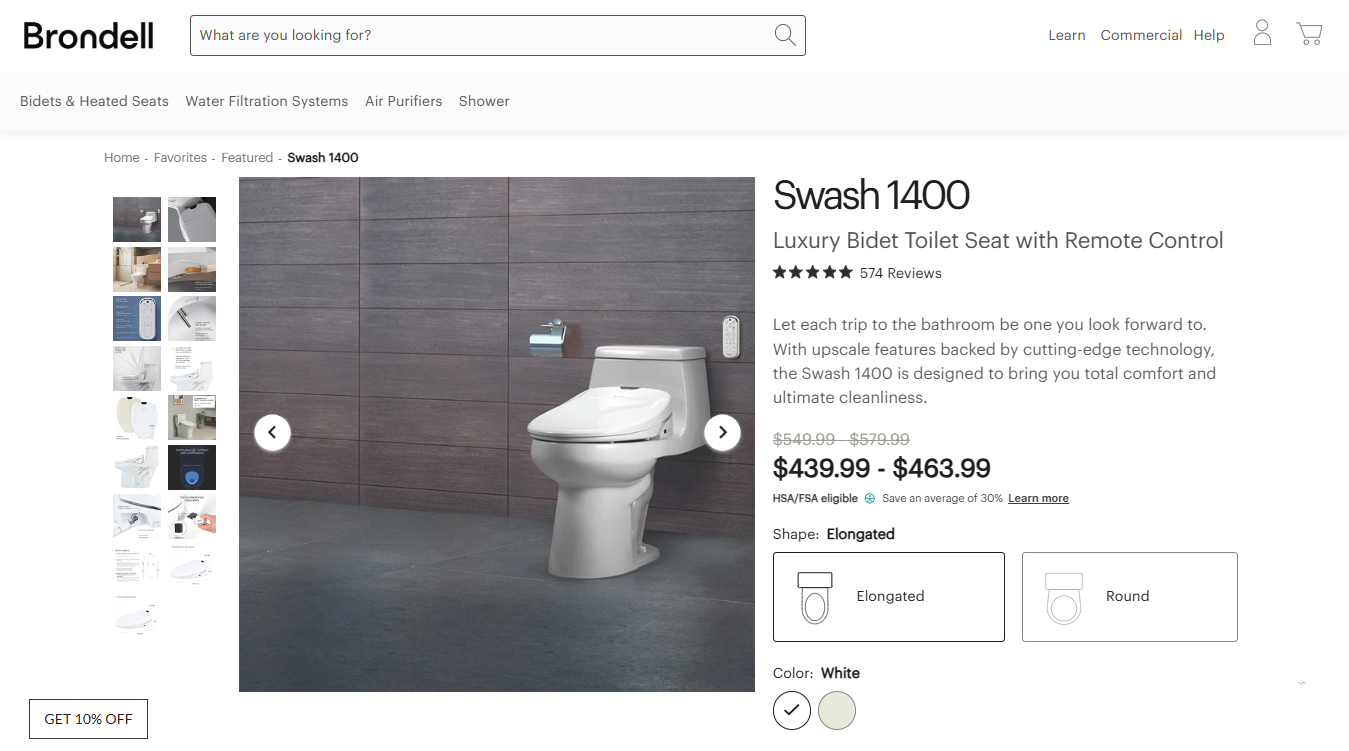
Brondell Swash 1400 is a great example of upselling through comfort layering. Most people shopping for a bidet start with one simple goal: better hygiene. And Brondell understands that the real revenue growth happens after that first decision is already made.
Once the customer accepts the idea of upgrading their bathroom experience, the conversation quickly expands.
The Swash 1400 page constantly moves the customer upward through feature layering. Heated seats. Endless warm water. Warm air dryer. LED nightlight. Programmable user presets. Carbon deodorizer. Stainless steel nozzles. Remote-controlled wash customization. Every added feature changes the product from “bathroom utility” into “daily comfort experience.”
The base function is cleaning. The premium experience is customization. That changes the buyer’s spending behavior dramatically. A customer who originally planned to spend around $150 on a basic bidet attachment suddenly starts rationalizing a $400+ luxury seat because it becomes a lifestyle upgrade used multiple times every single day.
Another strong upselling angle comes from household personalization. The two-user programmable settings sound small at first. But for couples sharing one bathroom, that feature becomes a convenience upgrade that is genuinely practical. Small details like that justify major price jumps surprisingly well.
Conclusion
Upselling techniques only work when they stop being upselling techniques. The moment they sound like a separate agenda, the conversation splits into two tracks: what the customer seeks and what you are trying to add on.
So let the upsell grow out of what they already said, not what you planned to sell. The difference is not in how many techniques you know. It is in how early you start listening for expansion points and how cleanly you connect them back to outcomes the customer already cares about.
That is exactly where we built CrankWheel to fit in. With it, you share your screen in seconds directly during a live phone conversation. There is no setup on the customer side. You simply send a link, and they see exactly what you are showing in real time on any device.
We also give teams live engagement visibility during presentations, so reps can actually see when prospects are paying attention, zooming in, or drifting away. That makes upselling conversations far more natural because reps stop assuming and start reacting in real time.
###
FAQs: Upselling Techniques
What is the most effective way to implement effective upselling techniques in sales?
To implement effective upselling techniques, identify customer needs during a conversation and present premium alternatives that directly enhance the original purchase outcome. Focus on providing value and solving problems rather than aggressive tactics, ensuring the upsell feels like a natural next step in the customer’s decision-making process.
How does upselling differ from cross-selling in modern sales strategies?
Upselling encourages customers to purchase a higher-value version of the same product, while cross-selling suggests related or complementary items to expand the overall purchase. Both methodologies aim to increase revenue, but upselling focuses on upgrading the original choice whereas cross-selling focuses on increasing the total number of items purchased.
Why is timing critical for successful upselling in sales conversations?
Timing is critical because customers are most receptive to upgrades during specific decision windows, such as during product configuration or immediately after realizing success with a basic feature. Engaging customers during these moments ensures the recommendation feels like a helpful, relevant extension of their current buying momentum rather than an intrusion.
Can data-driven insights improve the success rate of upselling efforts?
Yes, data-driven insights significantly improve upselling success by allowing sales teams to base recommendations on actual usage patterns, feature adoption, and behavioral triggers. Using tools to track expansion signals ensures that reps recommend higher tiers exactly when the customer is most likely to recognize the value of an upgrade.
About the author
Burkhard Berger is the founder of Novum™. He helps innovative B2B companies implement modern SEO strategies to scale their organic traffic to 1,000,000+ visitors per month. Curious about what your true traffic potential is?