
How Weak Onboarding Fuels Sales Rep Turnover on Your Team
- Sales rep turnover often starts during onboarding, when new hires lack proper training and support.
- Weak onboarding creates hidden costs through lost hiring investment, pipeline disruption, and added team workload.
- Nine onboarding gaps can push reps out, including poor call prep, unclear processes, isolation, and weak product training.
- Early wins build confidence, so new reps should start with realistic goals and manageable prospects.
- Clear training and ongoing coaching help reps understand their role and become productive faster.
- Track onboarding metrics such as 90-day retention, time to first deal, quota attainment, and first-year attrition.
- A structured onboarding process can reduce sales rep turnover by helping new hires feel prepared and confident.
Sales rep turnover almost never starts on the day someone actually quits. It builds over the first few weeks. That is back when a new hire was still trying to work out what they were even supposed to do. Most managers blame the pay or the market. Nine times out of ten, the real culprit is the start you gave them.
Here’s the better news, though. This is one of the few retention problems you can really control. Manage those first few weeks well, and your reps get a real taste of early success. And that is what makes them want to stay. Fumble it, and even strong hires start eyeing the door. So below, let’s see how a weak start pushes reps out, and what to change so your next hire actually stays.
What Sales Rep Turnover Is Really Costing You: 4 Hidden Business Impacts
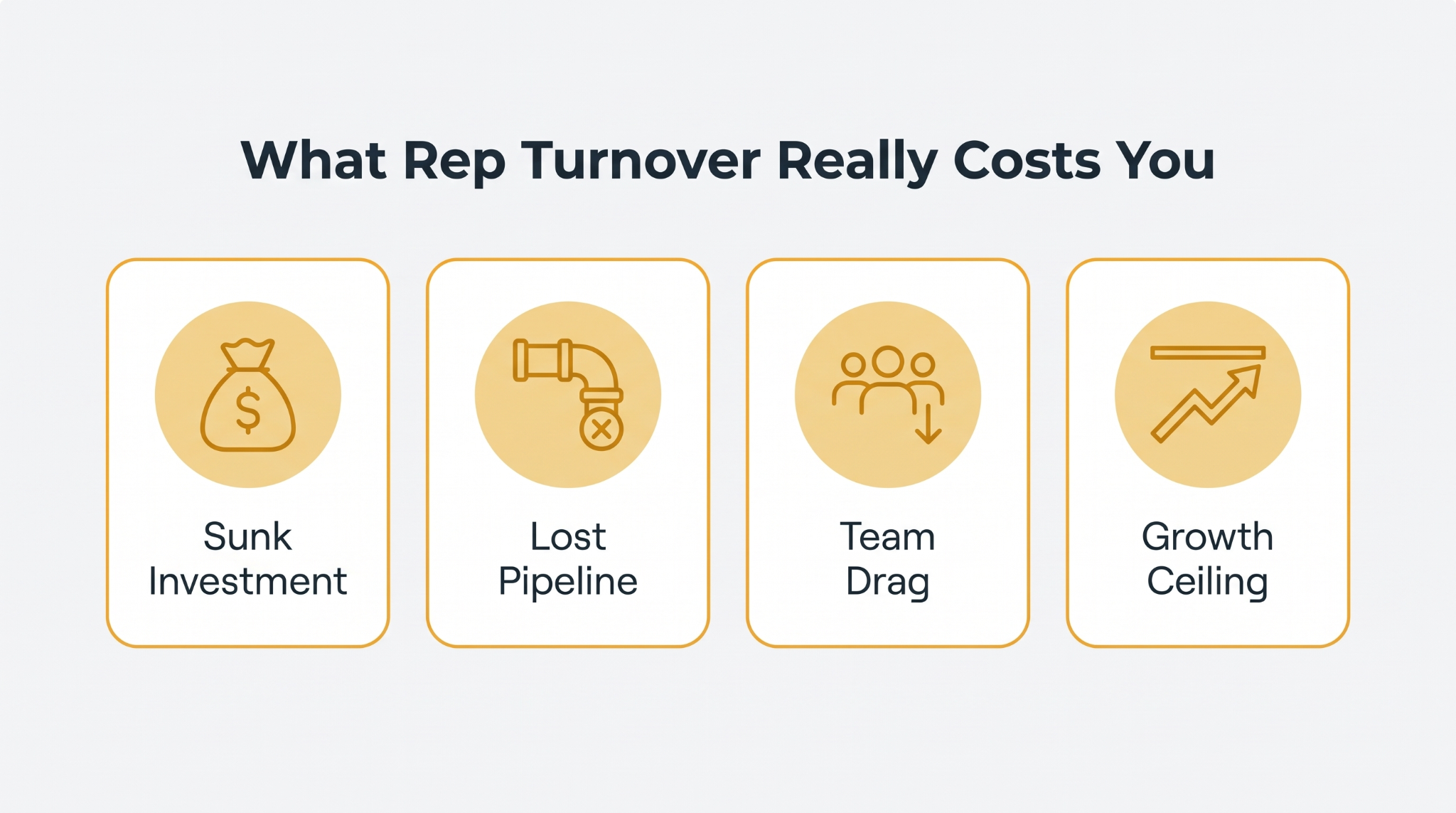
Before we get to the how, let’s look at what sales rep turnover actually drains out of a team. Sales loses people at roughly 35% a year. That is almost three times the 13% you would see just about anywhere else. Every single exit takes money and momentum out the door with it. And it hits you in four pretty distinct spots.
1. The Money You Invested In A Rep Who Never Ramped
Every rep costs you real money long before they close a thing. You are paying to recruit them, then paying their salary while they learn. On top of that comes all the hours your team gives up to train them. Replacing a salesperson runs about 1.5 times their yearly salary once you add it all up. Lose them early, and you never see a cent of it back.
2. The Pipeline That Walks Out With Them
When a rep walks, their whole pipeline walks right out with them. Half-finished deals go cold because nobody is minding them. Warm accounts get dumped on someone who has never spoken to them. And the buyers who only ever trusted that one person just stop replying.
You are not only losing a rep here. You are losing every deal that was riding on the client relationship and trust they
built.
3. The Drag On Everyone Who Stays
Sales turnover is never just one person’s problem. With the average sales rep tenure sitting at around 18 months, the reps who stay get the orphaned accounts loaded onto their own workload.
They also notice employee turnover, and that does something to morale. Meanwhile, you are back in interviews instead of coaching the team you still have. One early exit can knock a whole floor off its game for weeks.
4. The Ceiling It Puts On How Far You Can Grow
The steepest cost is the one that never shows up on a report. It is the ceiling turnover puts on your growth. A high-performing team only scales when it runs on something steady you can repeat. It can’t scale on whoever happened to stay this quarter. Keep churning through reps, and you never build that dependable engine. So the whole thing stays smaller than it should be.
9 Ways Weak Onboarding Fuels Sales Rep Turnover
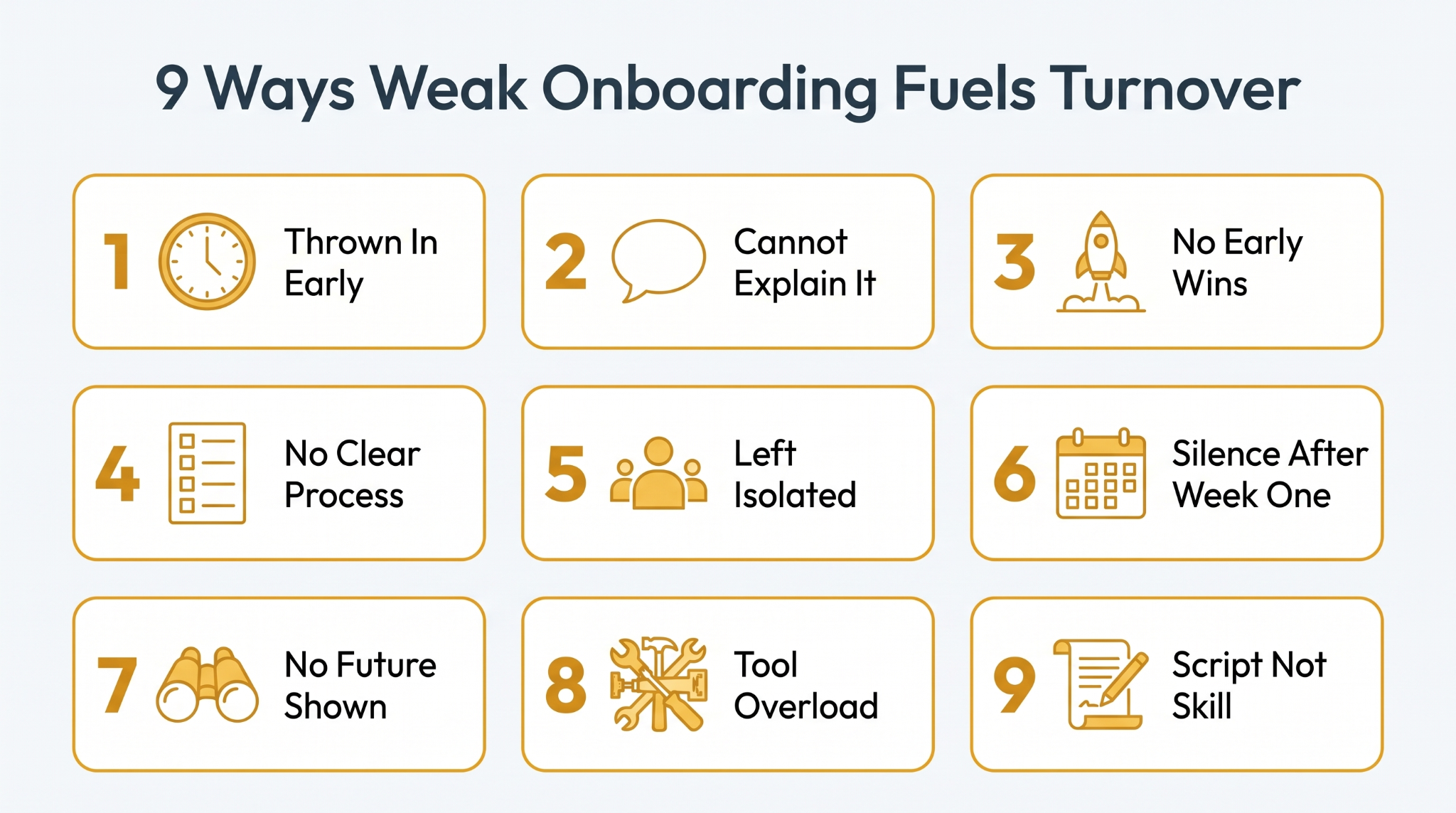
Right, this is the part that really matters. Weak onboarding doesn’t increase your sales rep turnover in one big obvious moment. Each little problem knocks a bit more off a new rep’s confidence, until leaving just feels easier than staying.
Nearly 19% of sales leaders say a lack of support in those first 90 days is a top reason sellers leave. So here are the 9 weak spots worth watching.
1. Throws New Reps Into Live Calls Before They Are Ready
Most sales organizations hand a new rep a phone and a call list by day two. No practice and no warm-up at all. So their very first real sales conversations are happening live, with actual prospects on the line.
And they are still not sure what they are meant to say. A few of those calls go badly in front of real buyers, and the new hire starts deciding this whole thing isn’t for them.
Giving them something to steady those early calls helps a ton too. A tool like CrankWheel lets a rep share their screen and run a quick demo without the prospect installing anything. That gives a nervous newbie something real to lean on while they find their feet.
This is toughest when the thing you are selling is expensive. Picture a rep whose whole day is talking nervous buyers into dropping serious money on something they can’t even hold first. That is a brutal spot to be in on day two with zero prep behind you.
Take this brand selling iced-out chains that run from a few hundred dollars to well over a grand. A new rep there is fielding the same worried questions all day long. Buyers want to know it is genuine and that it will turn up safely. Freeze on any of that, and the sale just evaporates in front of you.
The problem a green rep feels here is the sheer pressure. Every call is high stakes, and there is nowhere to hide a shaky answer. The fix isn’t complicated, though.
Let them shadow your top closers first and really learn the trust-builders. Things like the warranty and the free repair coverage. Give them a week of that and the calls stop feeling like a trap. This kind of prep matters most anywhere the price tag makes people hesitate.
How to Fix:
- Run role-play calls with a manager before any real prospect picks up.
- Have new reps shadow your two top performers on real calls first.
- Record every early call and review it together within the same day.
- Start them on warm, low-stakes leads before handing over the tough ones.
2. Hands Them A Product They Can’t Actually Explain
Sales talent can be full of energy and still lose every single deal. It happens the second they can’t answer a basic question about what they are selling. Weak onboarding blows right past real product knowledge.
So the rep rattles off a couple of features, then freezes the moment a prospect asks for more. Buyers read that hesitation as a red flag. And their confidence drains a little more with every question they can’t field.
There is a competitive side to this as well. Your buyer’s usually talking to a couple of other vendors at the same time. The rep who answers with real depth earns the customer’s trust, and the one who fumbles just loses the deal.
This gets even more real in fields where the thing you are explaining is really hard, and the stakes are sky-high. Think about the person who handles the very first call at this wrongful death law firm. They are not chatting about some soft, easy product. They are talking to someone on the worst day of their life.
The rep has to walk a grieving family through who is even allowed to file and the deadlines that apply. All of it while being careful not to add more weight onto them. A new intake rep who can’t explain that clearly loses the family’s trust in about 30 seconds.
What that rep feels is the trust slipping away in real time. There is no faking your way through a conversation that heavy. The fix is deep knowledge before they ever pick up the phone. Have them explain the whole process back to you in plain words first. That kind of prep pays off most anywhere the buyer is scared, and the details are complicated.
How to Fix:
- Make new reps pass a real product quiz before their first call.
- Have them explain the whole product back to you without any notes.
- Build a living document of the toughest questions your prospects actually ask.
- Pair every new rep with a product expert for their first month.
3. Sets Sales Performance Quotas Without Setting Up Any Early Wins
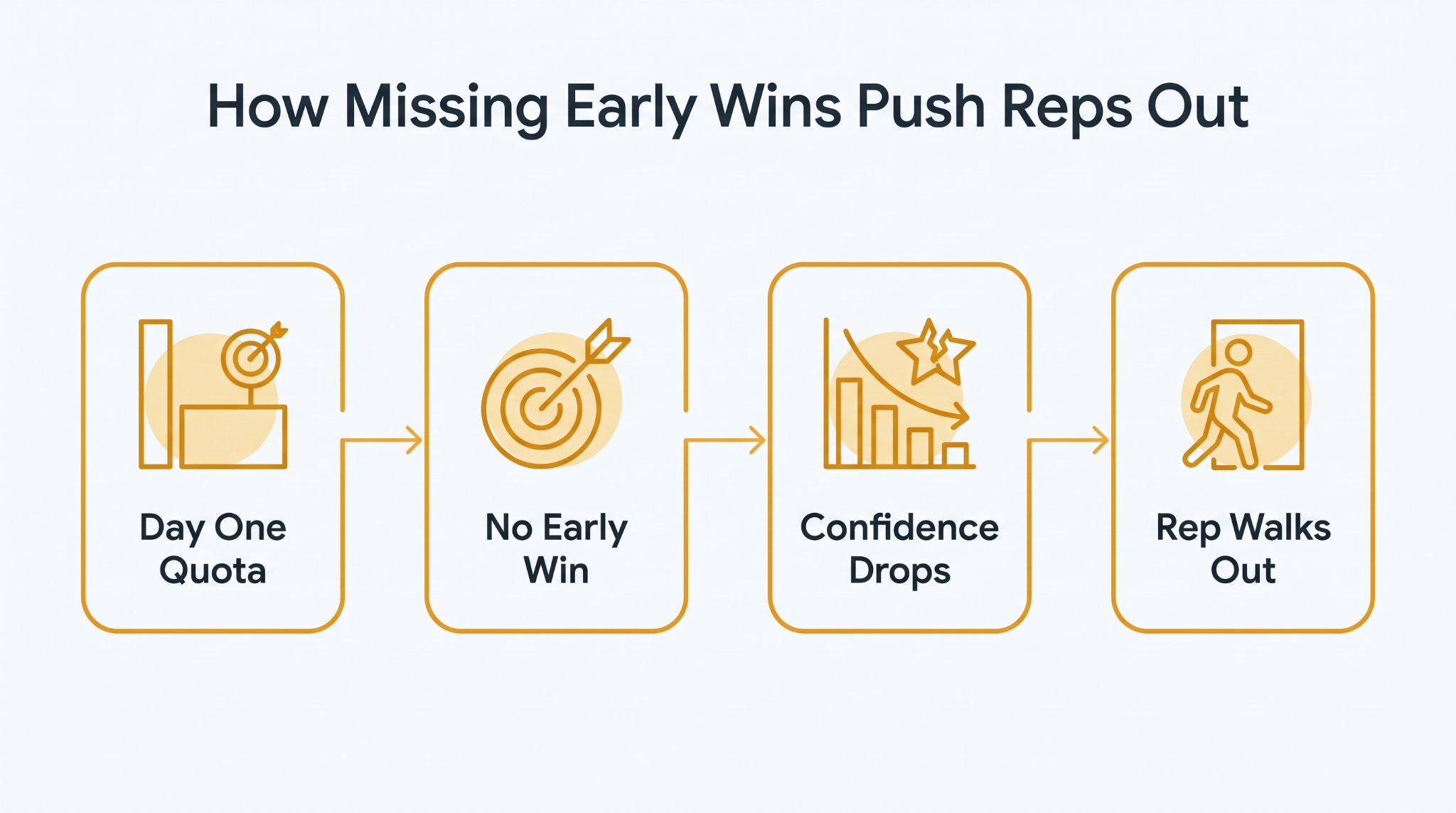
Someone drops a big number on a new rep before they have closed a single thing. Then does nothing to help them get on the board. So the weeks roll by with a giant target and a fat zero next to their name.
That gap between what is expected and what is happening is just crushing. Go long enough without a win, and a rep starts believing they will never get one.
That first win does way more than move a number. It tells a nervous rep they can do this job. Half the time, that little bit of belief is the only thing carrying them through a rough first month.
Early wins get so much harder when the thing you are selling is brand new to people. Imagine starting as a rep at a payments company offering cards for spending crypto – a genuinely novel product. But you are not selling something buyers already understand. You are selling a whole new way to pay, and that takes real explaining.
For a fresh rep, that novelty makes early wins feel miles away. Buyers hesitate, and the sales cycle just drags on. The fix is to feed them the easy ones first. Point them at the crypto-native crowd who already want this. Hand them a tight demo of the tap-to-pay part and let them close something quick. It works anywhere the product needs a bit of teaching before people buy in.
How to Fix:
- Give new reps a few warm, winnable deals in their first week.
- Set a small first milestone before the full quota ever kicks in.
- Celebrate the very first booked meeting, not only the first closed sale.
- Remove any payment or approval friction that could stall their first close.
4. Leaves Reps To Figure Out The Sales Process Alone
Some teams never write down how a deal gets from first hello to closed. So the new rep has to reverse-engineer the whole process from scraps of advice and whatever they overhear. They waste weeks guessing what comes next and when to chase a follow-up.
All that uncertainty is exhausting. And it makes a sharp person feel slow and useless, through no fault of their own.
It gets worse the second they go asking around for help. Every answer comes from a different person with a different opinion. So the process they piece together basically argues with itself. And that confusion weakens their sense of belonging.
It becomes more obvious when the sale is tricky to learn. A double-sided platform like this business resale marketplace is a perfect example. People list a business there, and buyers come looking for one.
A rep here has to understand two sets of customers at once. Their job is selling listing visibility to the sellers, but that pitch only works if they can explain how the buyer side behaves. Miss that, and they are just quoting prices with no story behind them.
The headache a new rep feels here is real. They are trying to sell one side while barely grasping how the other side thinks. The fix is a written framework that spells out both sides plainly.
Show them what buyers actually search for and which listings tend to move. Give them that, and the two-sided pitch finally makes sense. This matters at any marketplace handling supply and demand.
How to Fix:
- Document every stage of your sales process in one single shared place.
- Give reps a simple checklist for what actually advances each deal forward.
- Map the exact follow-up timing after every single type of prospect interaction.
- Show reps real examples of deals at each stage of the pipeline.
5. Isolates New Hires Instead Of Plugging Them Into The Sales Team
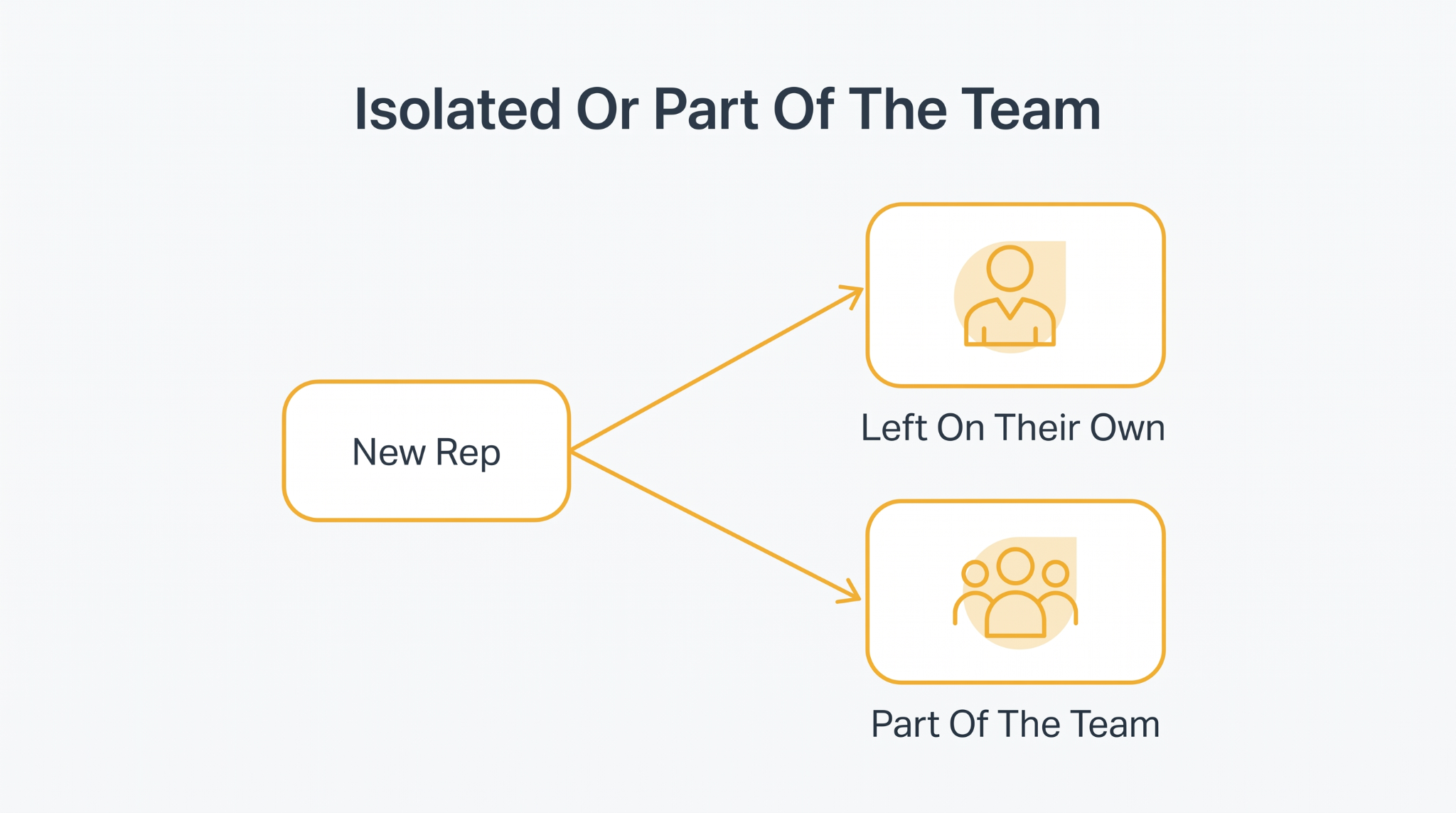
A new rep with nobody to turn to is a flight risk from day one. Weak onboarding sticks them in a chair or a home office and never connects them to a mentor. So the first time they run into a problem, there is no one to ask. And everyone runs into problems early on.
That loneliness is a genuine driver of sales rep turnover in most companies. A hard job becomes 10 times harder when you are facing it solo, and people in that spot start refreshing their resume.
Remote teams feel this one the hardest, honestly. A new hire at home can’t just spin their chair around and ask the person next to them. Without someone deliberately pulling them in, whole days go by with zero real human contact.
How to Fix:
- Assign every new hire a dedicated mentor for their entire first quarter.
- Introduce them to the entire team during their very first week here.
- Set up a channel where asking basic beginner questions always feels safe.
- Schedule regular peer check-ins, not only the formal sales manager reviews each month.
6. Goes Silent After The First Week
Tons of onboarding is really just a hectic first week, then silence. The laptop is set up, and the intro meetings are done. Then nothing. Suddenly your new rep is on their own for the exact stretch that decides everything.
Those first 90 days are when people are working out if they made a mistake. A manager who vanishes right then sends a pretty loud signal that nobody is watching.
The tricky part is how invisible this is from the top. The rep isn’t complaining, so on the surface, everything looks fine. Underneath, they are drawing their own conclusions and slowly checking out.
How to Fix:
- Schedule structured check-ins across the entire first 90 days of a rep’s start.
- Set clear 30-day and 90-day milestones together with the new rep upfront.
- Ask new reps what confuses them before they stop speaking up entirely.
- Keep the coaching consistent long after that busy first week has ended.
7. Never Shows Them A Future Worth Staying For
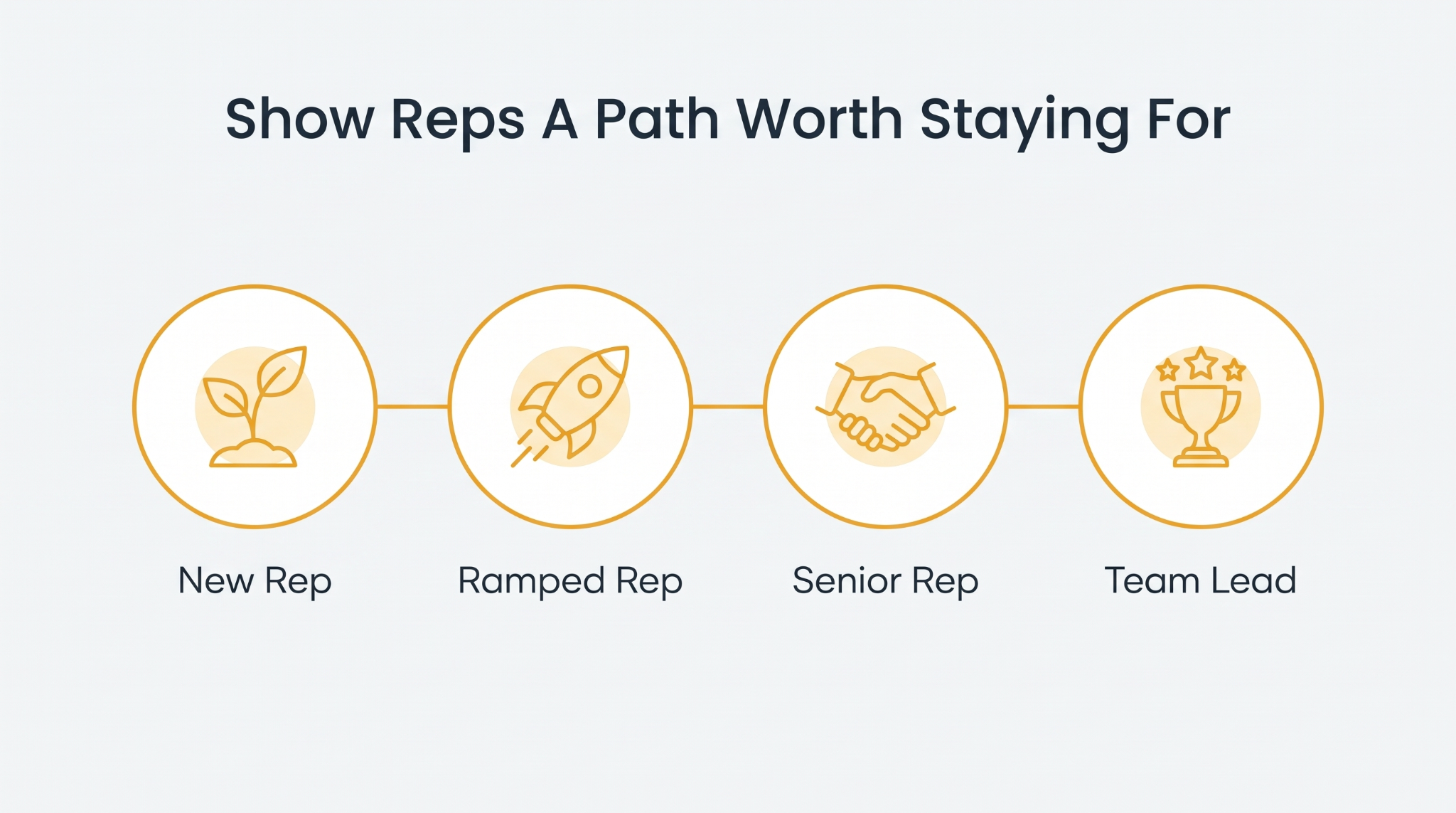
Top sales talent is ambitious by wiring. They want to know where a job is taking them. Weak onboarding sells the role hard but never shows the road past it.
So the new rep can’t really picture getting promoted or earning more later on. And without that picture, even a decent gig turns into a placeholder. They are gone the second something with a clearer path shows up.
This one is hard to take because the people you lose are your best. Your ambitious performers are exactly the ones chasing a bigger future. Show them nothing, and some rival who does will happily scoop them up.
How to Fix:
- Lay out the full promotion path and earning tiers on day one.
- Show them real examples of reps who advanced straight from this sales role.
- Tie their early milestones to concrete next steps in their career here.
- Revisit their bigger goals in every one-on-one, not only formal review cycles.
8. Buries Reps In Tools They Never Learned To Use
A modern rep inherits a dozen tools on their first morning. There is the CRM and the dialer, plus a bunch of tabs nobody bothered to explain. Weak onboarding just hands over the logins and figures they will work it out.
So the rep spends week one understanding software instead of talking to buyers. They log things wrong and keep losing hours to systems that were meant to help. Nothing kills early excitement faster than feeling slow.
There is another cost hiding in here too. Bad tool habits from month one are a nightmare to unpick later. A rep who learned the CRM wrong keeps feeding you numbers you can’t trust.
How to Fix:
- Train reps on each core tool before expecting any real daily use.
- Trim the whole tool list down to what a beginner truly needs.
- Create short how-to clips for every single system a new rep touches.
- Watch a new rep use each tool once, fully on their own.
9. Copies A Script Instead Of Teaching Reps To Actually Sell
Handing a rep a script and calling it training is such a common trap. Sure, a script gets them through a call on rails. But the moment a real conversation jumps the tracks, most reps struggle.
They never learned to ask sharp questions or handle an objection they hadn’t rehearsed. None of that comes from a script. It comes from real sales training, the kind a script can never stand in for.
There is a confidence cost buried in here as well. A rep leaning on a script knows full well they are improvising anything past it. That shaky feeling leaks right into their voice, and buyers can hear it a mile off.
How to Fix:
- Coach real discovery questions until your reps ask them without even thinking.
- Run regular objection drills using the pushback your buyers really give you.
- Teach your reps to listen and adapt, rather than just recite scripted lines.
- Review real call recordings together to sharpen live instinct over rigid scripts.
How To Tell If Your Strategies Are Actually Reducing Sales Rep Turnover Rate
Fixing onboarding only counts if the numbers actually move. So these are the signals worth tracking to know whether your changes are keeping reps around. Each row shows what a healthy reading for sales positions looks like too.
| Signal | What It Tells You | How To Check It | Healthy Sign |
|---|---|---|---|
| 90-Day Retention | Whether new reps survive the make-or-break window | Share of hires still active at 90 days | Above 90% |
| Ramp To First Deal | Whether onboarding gets reps producing sooner | Average days from start to first closed deal | Trending shorter |
| New-Rep Quota Attainment | Whether early targets are realistic and supported | Share of first-year reps hitting ramped quota | Rising each cohort |
| First-Year Attrition | Whether sales reps leave before they ever pay off | Share of reps leaving within twelve months | Well under 35% |
| Time To Full Productivity | How fast a rep reaches steady output | Weeks until a rep’s performance holds steady | Getting shorter |
| Onboarding Feedback Score | How supported new hires actually feel | Short pulse survey at 30 and 90 days | Consistently high |
| Regretted Attrition | Whether you lose people you wanted to keep | Share of exits your managers flag as regretted | Near zero |
Conclusion
Sales rep turnover looks like a hiring problem on the surface, but it is really an onboarding one. And that is great news. It means the fix is in your hands, not the market’s. Get those first few weeks right, and the average tenure starts to climb.
This is exactly where CrankWheel can help. So much of a strong start is just letting new reps sell for real early, and our no-download screen sharing makes that easy.
On any call, a rep can share their screen and run a live demo in seconds, with nothing for the prospect to install. So they come across as sharp and start closing from week one, not month 3. If you want new hires producing sooner and sticking around longer, give CrankWheel a try.
FAQs
Why are high-value sales teams more vulnerable to weak onboarding?
High-value sales usually involve complex products and longer sales cycles. New reps need strong product knowledge and proper call training before they can sell confidently. Without that preparation, early failures can hurt confidence and increase the risk of turnover.
How long does it take a new sales rep to become productive?
A new sales rep needs 3-6 months to become fully productive. The timeline depends on the product and sales cycle. Strong onboarding can help reps reach their expected performance sooner.
Why can scripted sales calls lead to higher rep turnover?
Scripts can help new reps get started, but they can become a problem when used as the entire sales training. Reps may struggle when prospects ask unexpected questions or change the direction of the conversation. Over time, that lack of confidence can make the role more frustrating.
What is the difference between voluntary and regretted sales rep turnover?
Voluntary turnover happens when a sales rep chooses to leave the company. Regretted turnover refers to losing a rep the company wanted to keep. A high rate of regretted turnover usually points to a retention problem worth investigating.
Can remote sales onboarding increase employee turnover?
Yes, remote onboarding can increase turnover when new reps do not get enough support. They may struggle to ask quick questions or build relationships with the team. Regular check-ins and easy access to managers can make remote onboarding more effective.
About the author
Burkhard Berger is the founder of Novum™. He helps innovative B2B companies implement modern SEO strategies to scale their organic traffic to 1,000,000+ visitors per month. Curious about what your true traffic potential is?