
Sales Onboarding Checklist to Get New Reps Selling Fast
A sales onboarding checklist gives every new rep a structured path from pre-boarding through independently managing the sales cycle. Before day one, complete paperwork, set up tools and equipment, and share the first-week schedule. During the first month, focus on product knowledge, ideal customers, the sales process, call shadowing, pipeline management, and weekly coaching. By month three, the rep should be able to manage the full sales cycle and meet clearly defined performance milestones.
New rep starts Monday. They get a CRM login and a vague instruction to “shadow Derek for a few days.” Three months later, that rep still can’t run a sales demo on their own. The average sales rep takes 5.7 months to become fully productive. Most of that delay can be avoided if every new hire follows a sales onboarding checklist from the get-go.
And that is exactly what we will sort out here. You will get a full onboarding checklist from pre-boarding through month three - with sales onboarding best practices for every stage.
What Is a Sales Onboarding Checklist?
Sales onboarding checklist is a step-by-step list of everything a new sales rep needs to complete between their first day and the point where they are selling on their own. Product training goes in there. So does CRM setup. So do shadowing sessions and practice calls. Each task follows a timeline with a specific deadline.
This is separate from general employee onboarding. HR covers the benefits paperwork and the company handbook. A strong onboarding checklist covers things that decide if a rep closes their first deal in month two or month six.
Why Every Sales Team Needs a Structured Onboarding Checklist: 5 Key Benefits
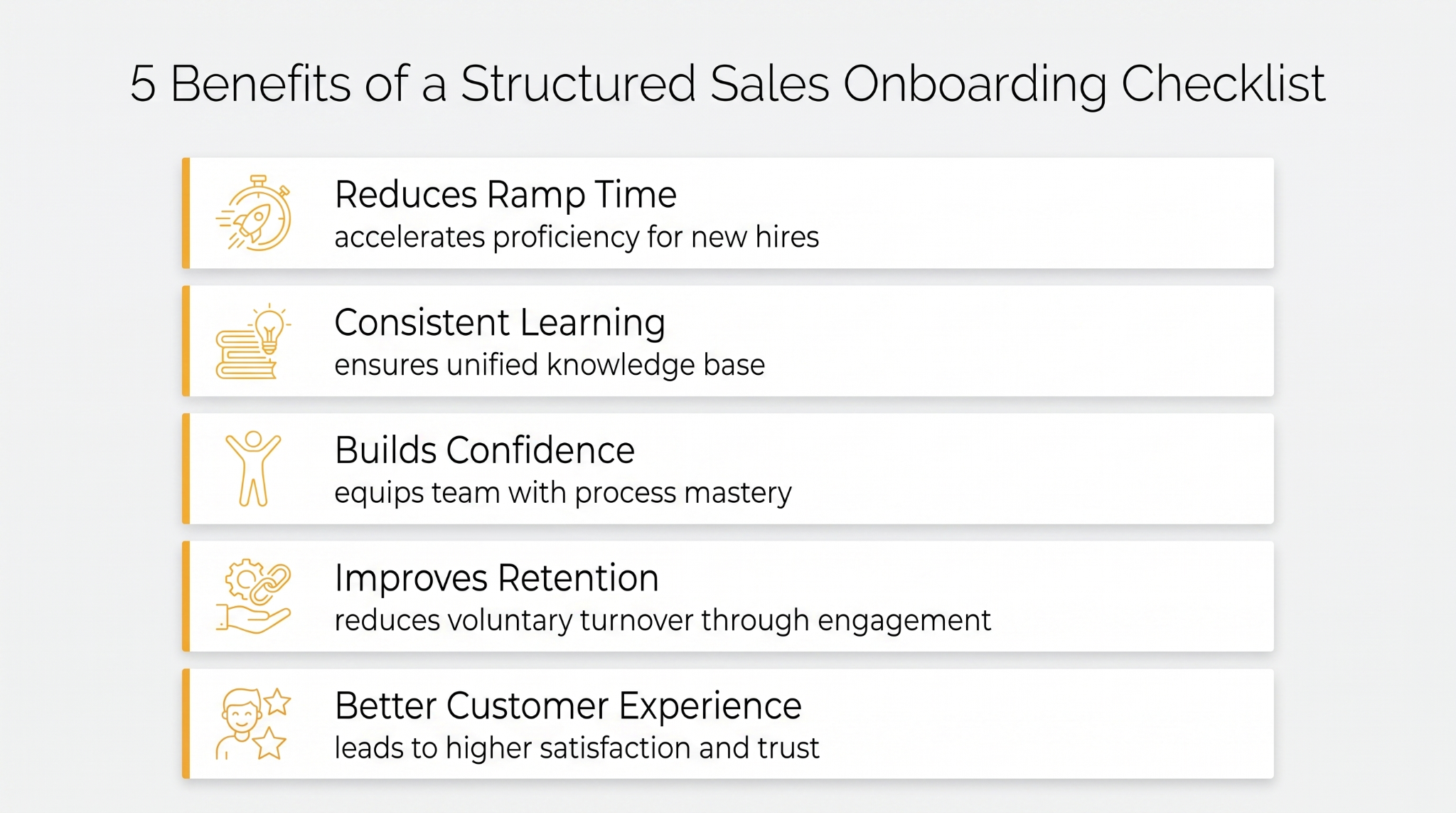
The teams that get reps selling fastest are the ones that wrote it down. Five things happen when you have an effective sales onboarding plan.
1. Reduces Ramp Time
Reps with a written onboarding path hit their numbers weeks ahead of reps who are left to figure things out. Formal onboarding boosts productivity by over 70%. That gap exists because structured reps aren’t spending their mornings wondering what they should be working on.
2. Creates a Consistent Learning Experience Across Every New Hire
Without a checklist, onboarding depends on whoever happens to be managing the new rep. One manager runs a two-week sales training. The other says “read the wiki.” The best sales onboarding programs take the manager lottery out of the equation. Every rep gets the same foundation.
3. Builds Confidence Before Customer-Facing Conversations
A rep who hasn’t practiced handling objections will sound shaky on their first prospect call. That uncertainty is audible. Most effective onboarding programs build in role-play sessions and recorded call reviews before any live conversation - so the first real call isn’t also the first practice run.
4. Increases Long-Term Sales Rep Retention
20% of new sales hires quit within 90 days. The most common reason is that they felt abandoned. A written onboarding path tells new hires someone actually planned for their arrival. That alone changes how they feel about staying.
5. Improves Customer Experience
Under-trained reps ask prospects questions the company should have answered internally. That ignorance reflects on the brand. When a sales onboarding program teaches the buyer’s world before the rep enters it, conversations start from a stronger place.
Happy customers are far more likely to stick around and recommend your business to people they know. That kind of word-of-mouth recommendation starts with giving buyers a great experience from the very first conversation.
Sales Onboarding Checklist That Helps New Sales Reps Become Top Performers Faster
Here’s the full checklist for an effective sales onboarding program. Five phases, eighteen items. Print it and check off each one as your new rep finishes it.
| Phase | Checklist Item | ☐ |
|---|---|---|
| Pre-Boarding | Complete Employment Paperwork | ☐ |
| Pre-Boarding | Set Up Email, CRM, and Software Access | ☐ |
| Pre-Boarding | Prepare Equipment and Workspace | ☐ |
| Pre-Boarding | Share the First-Week Onboarding Schedule | ☐ |
| Day One | Meet the Team and Key Stakeholders | ☐ |
| Day One | Review Company Mission, Values, and Sales Org | ☐ |
| Day One | Understand Compensation and Quotas | ☐ |
| Day One | Verify All Systems and Tools Are Working | ☐ |
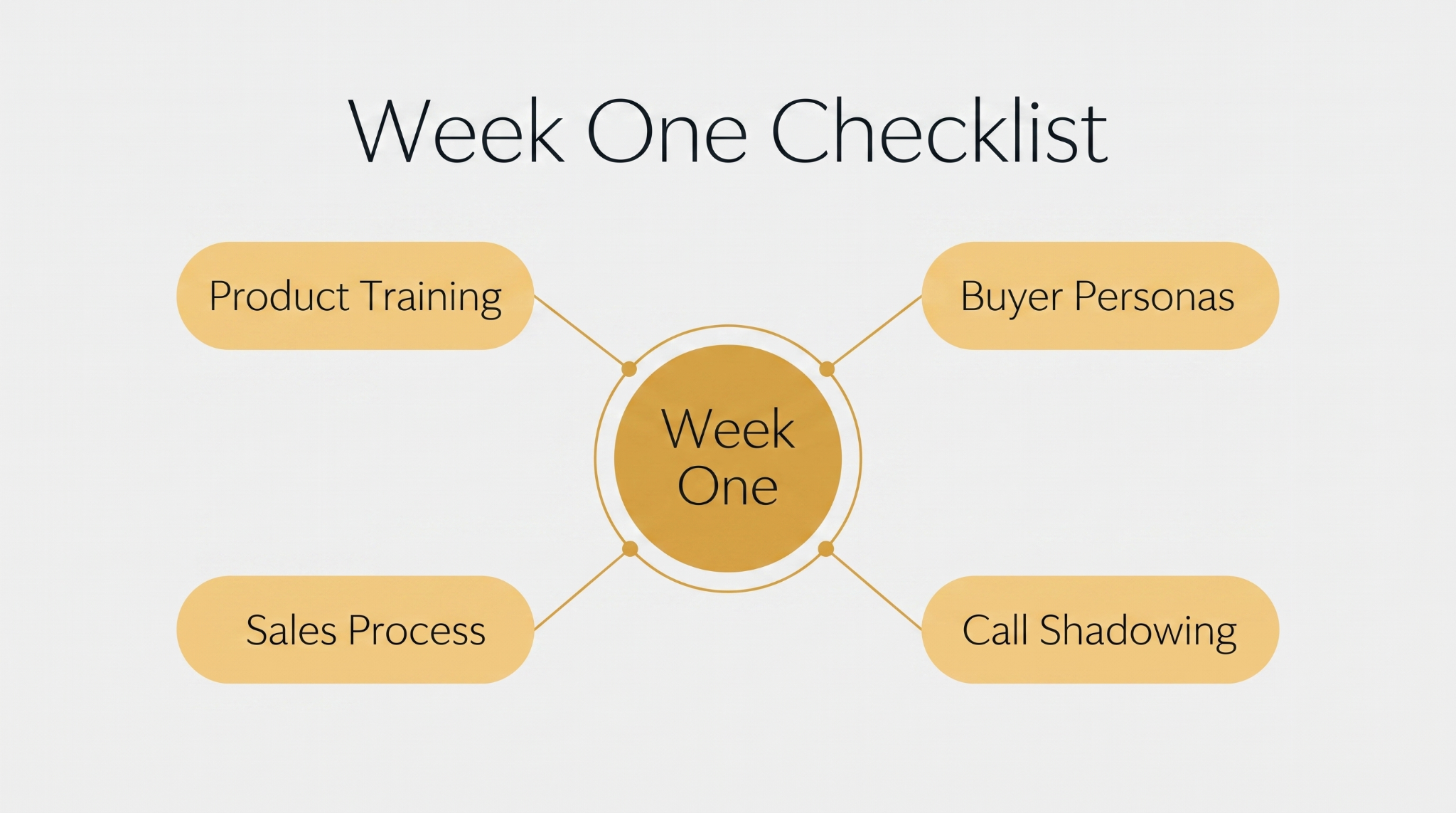
| Week One | Complete Product and Service Training | ☐ |
| Week One | Learn the Ideal Customer Profile and Buyer Personas | ☐ |
| Week One | Understand the End-to-End Sales Process | ☐ |
| Week One | Shadow Live Sales Calls and Demos | ☐ |
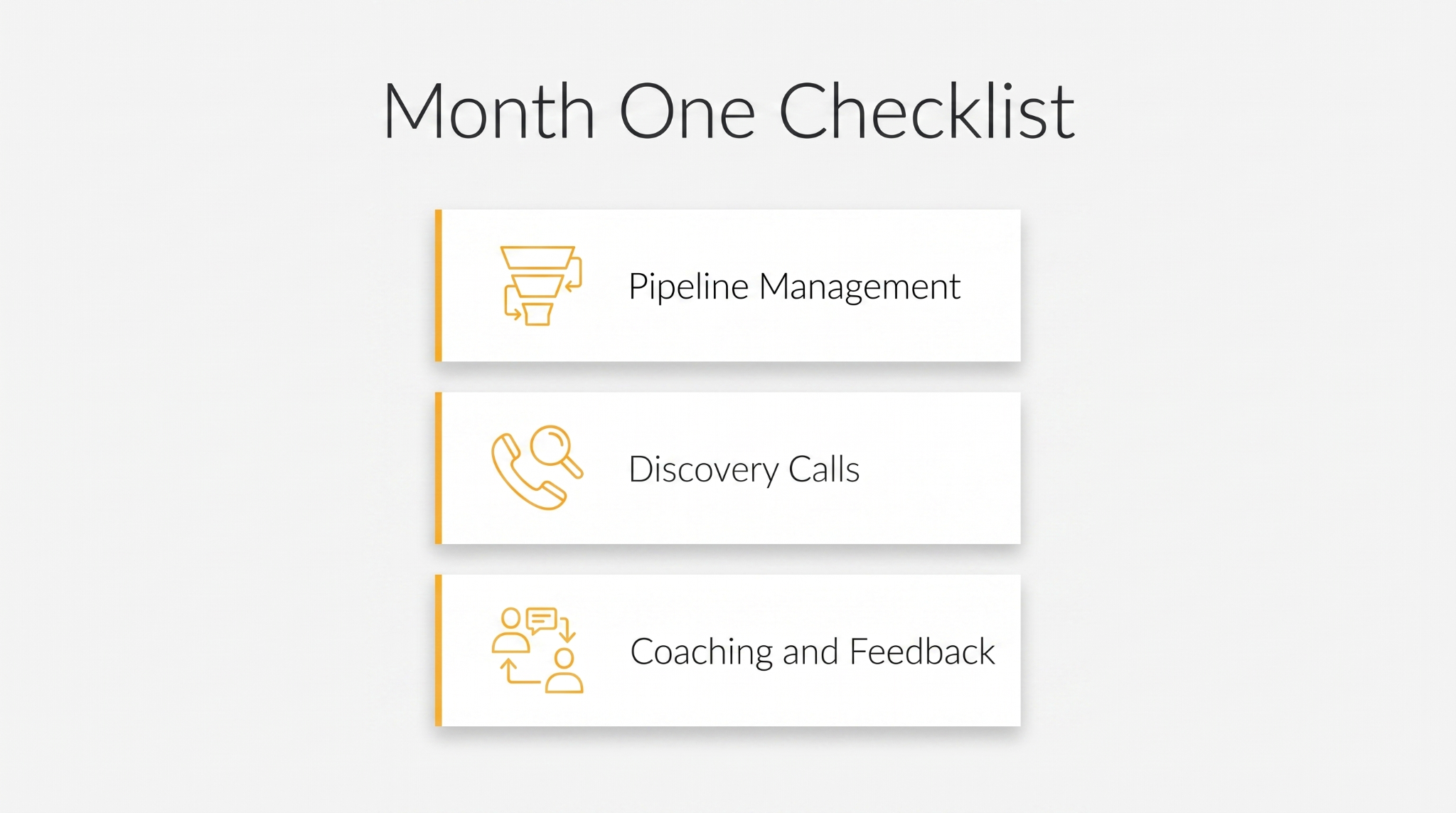
| Month One | Begin Managing Your Own Pipeline | ☐ |
| Month One | Conduct Independent Discovery Calls | ☐ |
| Month One | Receive Structured Coaching and Feedback | ☐ |
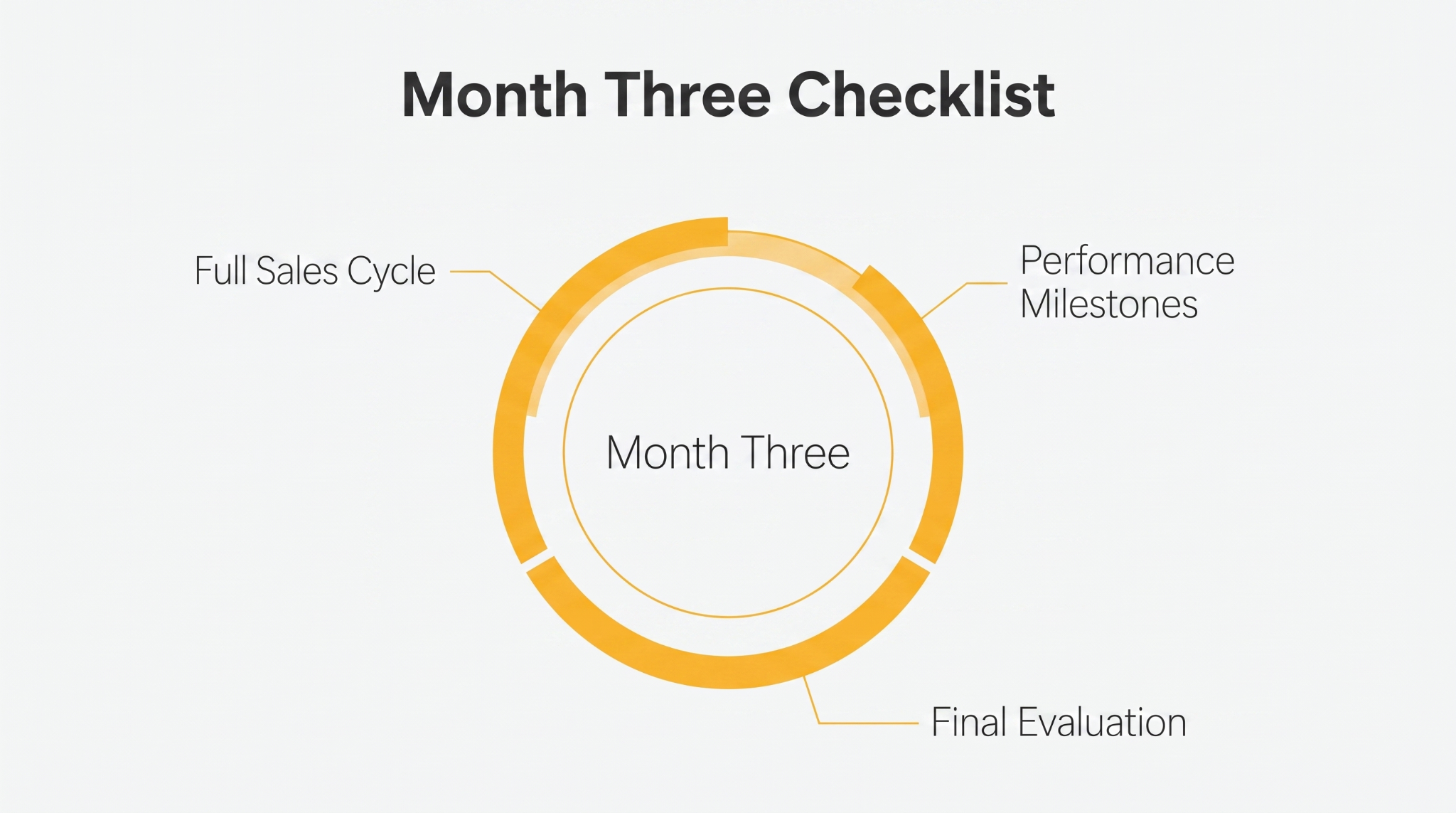
| Month Three | Manage the Full Sales Cycle Independently | ☐ |
| Month Three | Meet Activity and Performance Milestones | ☐ |
| Month Three | Complete the Final Onboarding Evaluation | ☐ |
Pre-Boarding Checklist
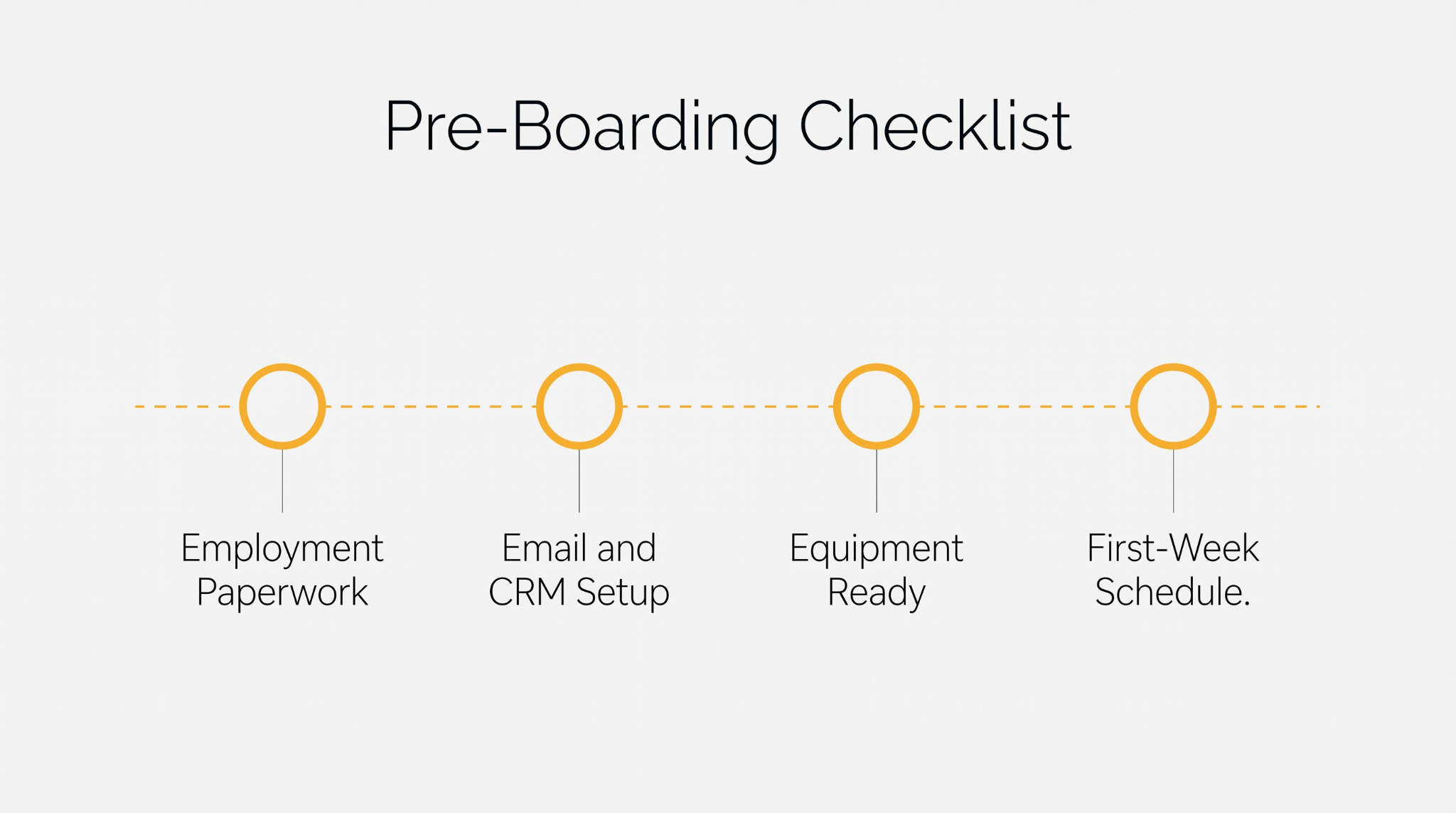
1. Complete Employment Paperwork
Tax forms and direct deposit details should be signed before the rep walks in. Every hour spent on paperwork on day one is an hour they are not learning the product.
- Send all documents through an e-signature tool at least five business days before the start date. No paper forms, no printing.
- Assign one HR contact for all paperwork questions. New sales hires shouldn’t have to email three different people about three different forms.
- Confirm everything is signed by Thursday. If something is missing, chase it that day. Don’t discover the gap on Monday morning.
2. Set Up Email, CRM, and Required Software Access
A rep waiting for a Salesforce login on their first morning is already behind. Every tool and all the training material they need on day one should be provisioned and tested before they show up. Email and CRM first. Then the dialer and sales enablement platform.
- Create all accounts and test the logins yourself before the rep’s first day. The password for the sales onboarding tool won’t work for them if it doesn’t work for you.
- Pre-load the CRM with a sample deal so the rep can click around the interface.
- Add the rep to the relevant Slack channels and email lists before day one. Being excluded from team communication on their first morning is isolating.
3. Prepare Equipment and Workspace
Remote or in-office, the rep needs working hardware from minute one. A missing headset or an unconfigured laptop kills the first two hours and starts the day on the wrong foot.
- Ship equipment to remote hires three business days early. Include printed setup instructions in the box - not just a link to a wiki page.
- For in-office teams, have the desk set up with a monitor and headset the afternoon before. A ready workspace tells the rep they were expected.
- Put a welcome pack on the desk with the onboarding schedule + the name of their onboarding buddy.
4. Share the First-Week Onboarding Schedule
Every new hire spends the weekend before starting wondering what Monday will be like. Sending the schedule early cuts that anxiety. They arrive ready to work instead of ready to ask questions.
When we built an onboarding hub for our sales enablement team, we set it up on the SharePoint intranet using ShortPoint. Each new rep got a branded dashboard with their full week-one schedule at the top. Below that sat the team roster with photos and Slack handles. And then the direct links to every training module they would need in their first five days.
The page looked like it belonged on the company’s public website - same colors and same fonts. Before the portal, managers wasted the first two hours of every first day answering “where do I find” questions. After it went live, new reps showed up already knowing their schedule and where to access every tool.
- Send the full week-one calendar by Wednesday before the start date. Include meeting links and the names of people the rep will meet each day.
- Block the rep’s calendar for all onboarding sessions so random meeting invites from people who don’t know they are new can’t hijack the first week.
- Add a short “what to expect” note to each calendar entry. “Product training with Sarah - bring questions about pricing tiers” beats a blank invite.
Day One Sales Onboarding Checklist
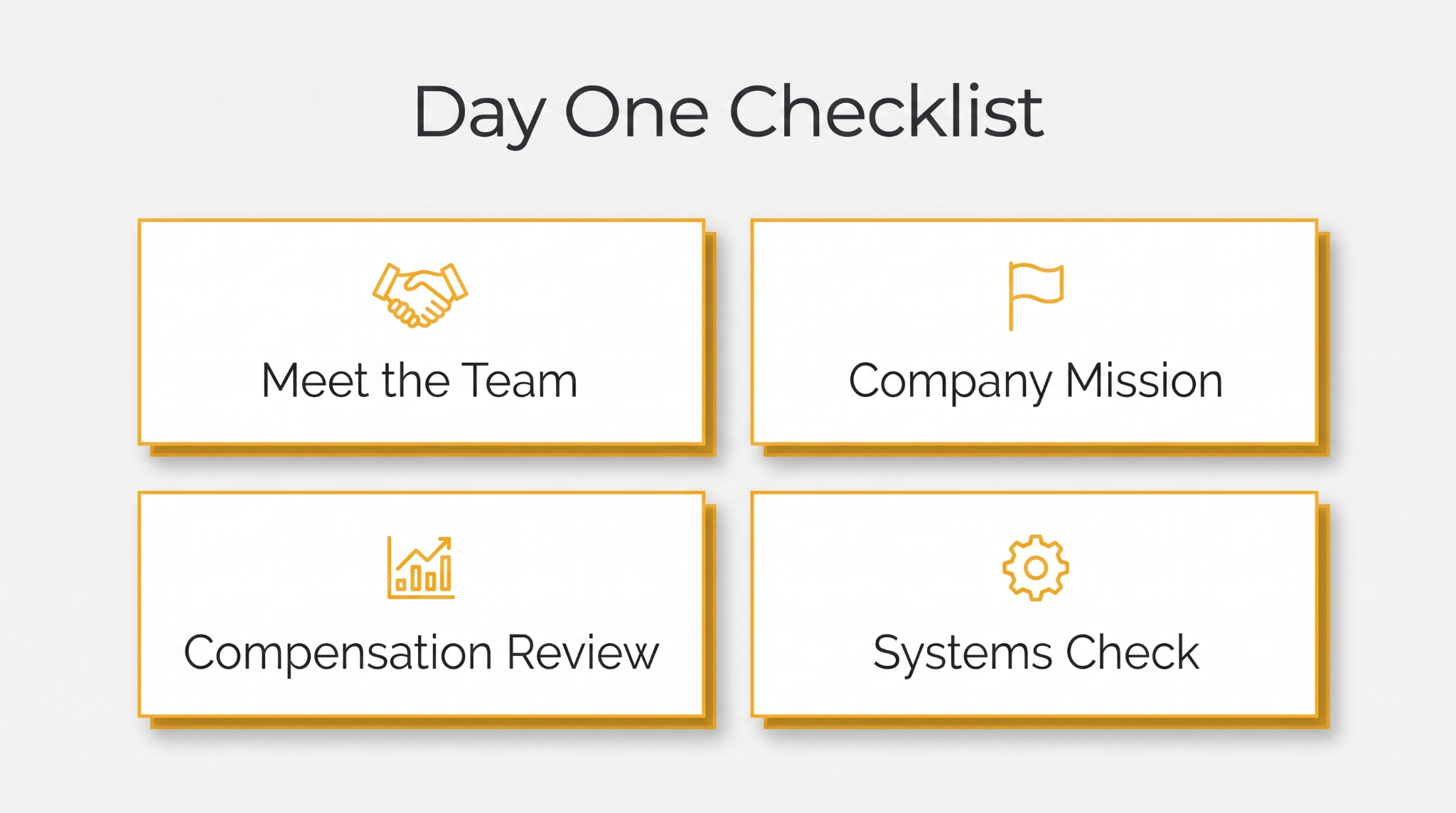
5. Meet the Team and Key Stakeholders
The rep needs to know five people by the end of day one - the ones they will work with every week. Not a 30-person Zoom where nobody remembers anyone. Five real conversations.
- Schedule 15-minute one-on-ones with the direct manager, one senior peer, the sales leader, the marketing contact, and the CS lead.
- Each person explains their role in 60 seconds and describes how they will work with the new rep. No rehearsed corporate introductions.
- Hand the rep a team cheat sheet with names and typical availability windows. It kills the “who do I ask about pricing?” confusion that usually lasts weeks.
6. Review Company Mission, Values, and Sales Organization
Don’t read the about page out loud. Have the VP of Sales or a founder sit with the new rep for 20 minutes and explain where the company is going. That conversation matters more than any recorded welcome video.
- Walk through where the company is headed and where sales fits. Keep it to 20 minutes and let the rep ask questions.
- Share the org chart showing who runs each segment and which territories belong to whom. The rep should know this before they leave for the day.
- Explain how sales works with marketing and CS. Reps who understand the handoff points close deals faster because they know who to reach out and when.
7. Understand Compensation, Quotas, and Performance Expectations
Unclear comp plans kill trust on day one. Walk through the numbers line by line. Every rep should leave knowing exactly how they get paid and what the ramp quota is for their first 90 days.
- Print the comp plan and walk through two real scenarios - a small deal and a large deal. Show the rep exactly what their commission check would look like in each case.
- Write the ramp quota down. 25% in month two, 50% in month three, full quota by month five.
- If accelerators or decelerators exist, explain both. The rep should know what happens when they crush quota and what happens when they miss it.
8. Verify All Systems and Tools Are Working
A rep who finds out on day two that their dialer doesn’t work has already had a frustrating start. Spend 30 minutes at the end of day one testing everything. Not checking that accounts exist - testing that they actually function.
- Have the rep send a test email and log a test activity in the CRM. Both should work before they head home. If either fails, fix it that afternoon.
- Test the screen sharing tool your inside sales team uses. The rep should be able to start sharing their screen in under 30 seconds without troubleshooting anything.
- Save a troubleshooting doc in a shared folder with the IT contact name and workarounds for the most common login issues. Prevents day-two help desk tickets.
Week One Sales Onboarding Checklist
9. Complete Product and Service Training
Product training isn’t memorizing specs. It is knowing which features matter to which buyer and why. A rep who can rattle off integration counts but can’t explain why a CFO should care will lose the conversation every time.
We redesigned product training last year and borrowed the content architecture from an unexpected place. Mesothelioma.net’s peritoneal mesothelioma section layers information in a deliberate sequence. Condition background comes first, then diagnostic criteria. Treatment options and outcome data follow in that order. Every page assumes you read the one before it.
We applied that same layered sequencing to the training curriculum. Session one covered the market problem. Session two walked through the product itself. Session three covered real outcomes and data that reps would reference in conversations with clients.
Reps couldn’t skip ahead - each session required completing the previous one. The group trained on this layered curriculum passed their product certification at twice the rate of the previous cohort that got everything in a single all-day session. The structure made the difference, not the content volume.
- Run product training across three separate days, not one marathon. Day one is the market problem. Day two is the product. Day three is customer use cases and results.
- End each session with five questions about buyer relevance. “Which feature solves the CFO’s reporting issue?” beats “How many integrations do we have?”
- Record every training session. Retention from a 90-minute live session drops below 30% within a week if the rep can’t go back and rewatch it.
10. Learn the Ideal Customer Profile and Buyer Personas
A rep who doesn’t know the ICP wastes pipeline on accounts that were never going to close. ICP training needs to cover the triggers that make a company ready to buy now - not just whether they technically fit the profile on a spreadsheet.
We ran an ICP exercise that worked better than anything we had tried before. We showed new reps John Campbell’s Hilton Head neighborhood listings and walked through how he segments a market by community type.
Each page on his site speaks to a different buyer. Retirees exploring 55+ communities see different amenity details. Families looking at waterfront properties see different. We told our reps to build their own persona documents using that structure. Each persona got its own page with industry context and the event that typically triggers a purchase decision.
The reps who finished that exercise closed their first deal 11 days faster than those who skipped it and read the generic ICP slide instead. Concrete segmentation beats abstract personas every time.
- Hand the rep your last 10 closed-won deals. Have them find patterns in industry and company size across those accounts. The ICP is in your win history, not in a slide deck.
- Build a “red flag” list of deal characteristics that signal a bad fit. Knowing who to avoid saves more selling time than knowing who to target.
- Set up a 30-minute call between the new rep and your top closer. Senior reps filter prospects by instinct - making that filter explicit gives new hires a six-month head start.
11. Understand the End-to-End Sales Process
The rep needs to know every pipeline stage and what pushes a deal forward or kills it at each one. This goes beyond clicking buttons in the CRM. A strong sales onboarding program is about understanding how buyers actually make decisions internally. This gives every rep a clearer picture of the path buyers take and makes it easier to remove friction before deals stall.
Knowing how demand gen feeds into lead gen also helps reps understand where their prospects come from before the first conversation.
- Walk through five real deals from first touch to close. Show the rep every CRM stage each one passed through and what specific action moved it forward at each step.
- Identify the two stages where deals stall most on your team. Train the rep on the actions that get deals moving again at those exact points - not general sales scripts.
- Give the rep a one-page process map to keep next to their screen. Each stage should list exit criteria and the required next action. One page, not a ten-page guide.
Sales onboarding usually spends plenty of time on CRM stages but very little time helping new reps understand how buying decisions differ across industries. That gap becomes obvious when someone moves into a specialized market.
A discovery process that works for selling accounting software won’t work when customers are evaluating products based on mobility or medical considerations. Before reps learn how to pitch, they need to understand why buyers purchase in that category in the first place.
Joe & Bella’s magnetic button-down shirt is a good example. Someone purchasing this isn’t simply comparing fabrics or colors. They may be shopping for themselves after surgery, managing arthritis that makes traditional buttons difficult, or helping a parent maintain independence while getting dressed.
Those motivations change the entire sales conversation. A new rep entering this market needs onboarding that covers far more than product specifications. They should understand the common physical challenges customers face and the differences between adaptive and conventional clothing.
Reviewing products like this alongside real customer scenarios gives new reps the context they need before speaking with buyers, resulting in more informed conversations and fewer assumptions during discovery.
12. Shadow Live Sales Calls and Product Demonstrations
Recorded calls teach patterns. Live shadows teach instinct. The new sales team member watches a tenured seller adjust in real time when a prospect pushes back. They see the prep before the call and the debrief after - context that recordings never capture.
Having reps learn how to screen share effectively during these shadow sessions means they pick up demo habits before they ever run one on their own.
- Schedule at least three shadows in week one. One discovery call, one product demo, and one late-stage negotiation. Each type teaches different sales skills.
- Debrief for 10 minutes after each shadow. Ask the rep what they noticed and what they would have done differently. Watching without reflecting doesn’t build anything.
- Give the rep access to 10 recorded calls scored by the team - five strong and five weak. Label why each one earned its rating so the rep knows what good actually is.
Month One Sales Onboarding Checklist
13. Begin Managing Your Own Pipeline in the CRM
By week three, the rep owns a real pipeline. Not a sandbox. Real accounts with real deadlines. That pressure is where everything from week one actually starts paying off.
- Hand the rep 15-20 leads from inbound and outbound sources. Mix in warm leads - early wins build momentum that cold lists alone won’t create.
- Set a daily CRM habit: every opportunity gets updated, every next step gets scheduled, every stale deal gets flagged. Build this discipline now before it becomes a problem in month four.
- Review the rep’s pipeline with them once a week. Focus on whether deals are moving forward, not just how many exist.
This is the step where onboarding exposes a marketing problem that existed long before the new rep showed up. If the company doesn’t have a reliable lead generation engine, the rep has nothing to put in the pipeline. They end up cold calling from a purchased list while the job posting promised “warm inbound leads.” That is a retention killer.
One niche where this matters more than most is highly technical manufacturing. Their buyers - procurement managers at aerospace firms, defense contractors, oil and gas operators - search for vendors by specific capabilities, not brand names.
If the marketing isn’t generating inbound RFQs from those searches, the new rep is starting month one with an empty CRM and no way to fill it on their own. For businesses in that position, working with someone like weCreate fabrication and metalwork marketing agency before hiring the next rep makes the onboarding investment actually pay off.
They can get the right RFQs flowing in so the rep has qualified opportunities waiting from day one. That does two things for your onboarding. First, the rep gets to practice on real deals during month one instead of rehearsing on dead leads that go nowhere. Their discovery calls are with actual buyers who submitted an RFQ - not names pulled from a cold list.
Second, you get to evaluate the rep’s selling ability on fair terms. If the leads are qualified and the rep still can’t close, that is a coaching issue you can address. If the leads were bad to begin with, you can’t tell whether the rep is struggling or the pipeline is just empty.
Solving the lead gen problem before onboarding starts is how you make every other step on this checklist actually count.
14. Conduct Independent Discovery Calls
This is the milestone that tells you if you have an effective sales onboarding process. A rep who can run a solid discovery call by week four is on track. A rep who can’t do that needs more training, not more time.
- Have the rep run their first five discovery calls with the sales manager listening silently. No interrupting. No saving the call. Let them own it, then debrief after.
- Score each call on two things: did the rep find the real problem, and did they set a concrete next step? Those two signals cover most of what matters in discovery.
- After five calls, ask the rep to self-score before sharing your evaluation. The gap between how they think they did and how they actually did is where the best coaching conversations start.
15. Receive Structured Coaching and Performance Feedback
A weekly review between the rep and their manager is the highest-return activity in all of onboarding. Teams that stop doing this after week two watch ramp times stretch by weeks. Small mistakes compound when nobody catches them. A rep who mispronounces the product name for a month heard it wrong once, and nobody corrected it.
- Block a recurring 30-minute slot every week for the first 90 days. The first half is call review. The second half is pipeline coaching. This meeting doesn’t get cancelled.
- Pick one call per week to review together. Play a two-minute clip where the rep struggled and coach on that specific moment.
- Track coaching topics week over week. If “ask better follow-up questions” shows up three weeks running, the coaching method needs to change - not just the words.
Month Three Sales Onboarding Checklist
16. Manage the Full Sales Cycle Independently
By week 12, the rep should take a deal from first outreach through close without the manager stepping in. The manager is still there for questions. But the rep owns the relationship and the timeline. If they can’t do that by now, the problem usually started earlier - a product knowledge gap or a process step that got skipped.
- Review the rep’s last three closed deals and check whether they managed each one without needing manager rescue at any point in the cycle.
- Compare deal velocity against the team average. If the rep consistently stalls at one CRM stage, that stage points to a specific skill gap worth coaching on.
- Have the rep present one active deal in a team pipeline review. How they describe the buyer’s situation and the next step tells you whether they truly understand the selling motion.
17. Meet Agreed Activity and Performance Milestones
Activity numbers at month three should be around 75% of what a tenured rep produces. Full quota is still a few months away. But call volume and meetings booked should be closing in on team norms by now.
- Compare the rep’s key performance indicators against team averages - calls per day and meetings per week. A gap bigger than 20% needs a written action plan.
- Check conversion rates at each pipeline stage. A rep making 50 calls a day with zero meetings booked has a skill issue behind activity numbers.
- Celebrate the first closed deal publicly. Recognition at this stage reinforces the exact work habits that got them there.
18. Complete the Final Onboarding Evaluation
This isn’t a test. It is a sit-down between the rep and their manager to talk about onboarding success and what still needs attention. Some new sales employees finish onboarding fully ramped. Others need focused help in one or two areas. Both are fine - the evaluation is how you figure out which one you are looking at.
- Go through every item on this sales onboarding checklist together. The gaps tell you exactly where to aim coaching for the next quarter.
- Ask the rep what helped and what felt like wasted time. Their honest feedback is how you improve sales onboarding effectiveness.
- Set two development goals for the next 90 days - one skill goal and one sales methodology goal. Concrete targets beat vague instructions like “keep improving.”
Conclusion
The sales onboarding checklist isn’t the hard part. Following it the same way for every hire is. So write the process down and make it repeatable. It turns onboarding from a collection of activities into a system. And systems create results that can be improved and repeated with every new hire who joins the team.
At CrankWheel, we make it easy for sales team members to share their screen during a live phone call without asking prospects to download software or create an account. They can simply send a link by text or email, and the prospect can view the presentation on any device within seconds.
You can record screen shares, create sales videos, track viewer engagement, and even hand over remote control when a customer needs to complete a form or interact with your screen. These features help you create a better sales onboarding process because every rep has practical tools that are simple to learn and easy to use.
Get started with CrankWheel for free and see how quickly your team can turn phone calls into productive sales conversations.
Frequently Asked Questions
What should be included in a sales onboarding checklist?
A sales onboarding checklist should include employment paperwork, email and CRM access, equipment setup, product training, ideal customer profile education, sales process training, call shadowing, pipeline management, discovery call practice, coaching sessions, performance milestones, and a final onboarding evaluation.
The checklist should assign each task to a specific stage, such as pre-boarding, day one, week one, month one, or month three.
How long should sales onboarding take?
A structured sales onboarding program should typically cover the rep’s first 90 days, although it may take longer for a salesperson to reach full quota productivity.
By the end of the first week, the rep should understand the product, target customer, sales process, and core tools. By the end of month one, they should manage a pipeline and conduct discovery calls. By month three, they should be able to manage most or all sales cycle independently.
How can companies reduce sales rep ramp time?
Companies can reduce sales rep ramp time by documenting the onboarding process, providing system access before the start date, breaking product training into focused sessions, using real customer and pipeline examples, scheduling call shadowing, and conducting weekly coaching.
Managers should also define measurable milestones for each stage of onboarding so that skill gaps can be identified and corrected early.
How do you measure sales onboarding success?
Sales onboarding success should be measured using both activity and performance indicators. Useful measurements include CRM adoption, calls completed, meetings booked, discovery call quality, pipeline movement, conversion rates, deal velocity, product knowledge, and the rep’s ability to manage a full sales cycle independently.
By month three, a new rep’s activity levels should be approaching those of established team members, and any significant performance gaps should have a documented coaching plan.
About the author
Burkhard Berger is the founder of Novum™. He helps innovative B2B companies implement modern SEO strategies to scale their organic traffic to 1,000,000+ visitors per month. Curious about what your true traffic potential is?