
Proven Sales Negotiation Techniques to Win More Deals In 2026
Sales negotiation isn’t about dramatic tactics - it’s about subtle control within everyday conversations. By mastering core skills like active listening, emotional intelligence, and strategic communication, you can guide deals more effectively. Use proven techniques such as anchoring, silence, and value-based framing to maintain leverage, avoid unnecessary discounts, and close on stronger terms. Focus on understanding real buyer motivations, trading value instead of price, and keeping momentum with clear follow-ups. The less you force the deal, the more control you gain - and the more likely you are to close profitably.
Strong negotiation usually looks very ordinary from the outside. Nothing dramatic. Most of it happens quietly inside the flow of a conversation. A well-timed pause. A carefully framed option. A confident explanation of pricing. Sales reps who understand how to use these sales negotiation techniques keep the deal moving exactly where it needs to go.

Curious? Perfect… because there is more ahead. These 9 techniques take normal conversations and turn them into straight-up negotiation wins. You will see why giving a little here and holding firm there can make the difference between a deal stalled out and a handshake on your terms.
What Is Sales Negotiation?
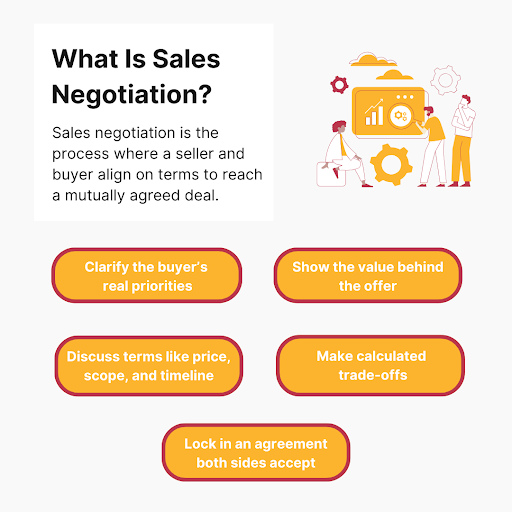
Sales negotiation is the process in which a seller and a potential buyer discuss terms to reach an agreement that works for both sides. They align on things like price, scope, timelines, deliverables, and conditions. The goal is to close the deal while protecting value – both the seller’s and the buyer’s.
At its core, sales negotiation is about:
- Understanding what the buyer actually wants
- Communicating the value of what the sales representative is offering
- Making trade-offs without giving away too much
- Reaching a final agreement that both sides can commit to
5 Essential Sales Negotiation Skills You Need To Close Strong Deals
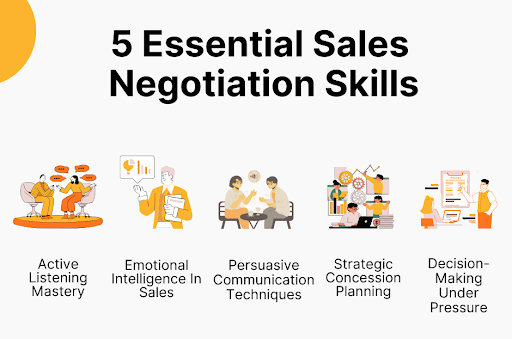
You can know all the tactics in the world, but if you haven’t mastered sales negotiation skills, things start unraveling the moment a deal gets real. Here are the 5 skills you need the most to build a profitable relationship.
1. Active Listening Mastery
Most people jump in too fast. The other party is still talking, and they are already forming a reply. That is how you miss the one thing that actually mattered.
With effective sales negotiation training, you start hearing what other sales teams miss. The hesitation. A word they repeat. The real concern they didn’t say directly.
What To Do:
Let them finish. Give it a second. Then play it back in your own words so they know you understood it.
Example:
“Sounds like the timeline matters more than anything else here.”
Now you are working with something real, not assuming.
2. Emotional Intelligence In Sales
Every deal has emotion under the surface. Pressure from their boss, worry about making the wrong call, stress around timing – it is all there. Even when the conversation sounds calm. You can feel it if you pay attention. And once you do, your responses change.
What To Do:
Watch how they say things – not just what they say. If their tone tightens or they rush, adjust your pace. Match the moment.
Example:
They start sounding a bit off and distracted. Instead of pushing ahead, you go: “Let’s slow this down for a second and make sure we are on the same page.”
That small shift settles everything.
3. Persuasive Communication Techniques
This is where most people overdo it. They talk too much or explain too hard when they are trying to “convince.” That usually causes problems. The people who negotiate effectively and close strong deals keep it simple. They say just enough, then stop.
What To Do:
Limit the extra words. Use simple statements that tie your offer directly to what they care about. That helps increase conversion rate, because the message connects clearly and people find it easier to say yes.
Example:
“This works because your team gets faster results without adding more to their plate.”
That is it. Clear and easy to take in.
4. Strategic Concession Planning
Giving something up is part of the negotiation process. Doing it without a plan is where things go off track. If you start handing out price concessions too freely, it sets a pattern. They ask, you give. That keeps going in every sales cycle.
What To Do:
Decide early what you are open to adjusting. And when you do adjust, tie it to something in return.
Example:
“If we move on pricing here, we can wrap this up today.”
Now it is a trade that creates mutually beneficial outcomes, not you giving things away.
5. Decision-Making Under Pressure
This is where deals either hold together or fall apart. Pressure hits. Something unexpected comes up. And now all eyes are on you. If you hesitate, it shows. If you stay steady, people follow your lead.
What To Do:
Know your boundaries before the conversation even starts. When things get tight, stick to them and respond calmly.
Example:
They push for a bigger discount out of nowhere. You say: “That number doesn’t work for us, but here’s what we can do.”
9 Effective Sales Negotiation Techniques To Secure More Profitable Deals
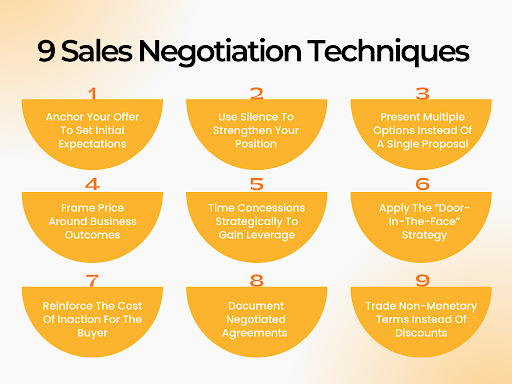
Here are 9 sales negotiation tactics you can start using right away to keep more control and walk away with a bigger deal size.
1. Anchor Your Offer To Set Initial Expectations
Simple fact: whoever puts a number (or structure) on the table first usually shapes the entire deal. Not always wins – but definitely controls the direction.
Anchoring isn’t about being aggressive. It is about not letting the other person define your value for you. If you stay passive and wait, you are basically agreeing to negotiate inside their frame. And that is almost always smaller than yours.
Do This:
- Walk in knowing your ideal number and your acceptable range – never figure it out mid-conversation
- Say your anchor like it is normal, not like you are asking for permission (“Projects like this typically sit around…”)
- Attach a reason immediately – scope, results, past work. It shouldn’t be random
- If they push back fast, don’t move fast. Restate the value proposition before you even think about adjusting
2. Use Silence To Strengthen Your Position
Most people lose money because they talk too much. Seriously – watch any successful negotiation. The moment tension appears, one person jumps in to “fix” it. They explain more, soften their stance, or worse… start discounting without being asked. But when you stop talking, the pressure doesn’t disappear – it transfers. And people hate sitting in that pressure.
Do This:
- After you say your price, stop. Don’t justify it unless they ask
- If they say “hmm” or hesitate, let that moment breathe instead of filling it
- Count 3 seconds in your head before responding to anything important
- Practice this in low-stakes conversations first so you don’t panic in real ones
3. Present Multiple Options Instead Of A Single Proposal
If you give one option, you are basically asking: “Do you want this or not?” That is a dangerous question.
But if you give choices, now you are asking: “Which one works best for you?” Completely different energy. Now you are guiding. People feel more in control when they get to choose, even if you have designed all the options.
Do This:
- Always give 3 choices – it is the sweet spot (not overwhelming, not limiting)
- Design one option that you want them to pick. Make it feel like the smart middle
- Make the cheapest option clearly limited so it doesn’t become the default
- Name your options in a way that signals value (not just “Basic / Standard / Premium”)
4. Frame Price Around Business Outcomes, Not Numbers
Nobody wakes up excited to spend money. They get excited about what money does.
If your entire pitch is just numbers, you have made yourself easy to compare… and easy to reject. But when you connect your price to a mutually beneficial solution, something changes. Now it is not “this costs X.” It is “this leads to Y.” And the price isn’t the story anymore.
Do This:
- Before talking numbers, get clear on what the buyer actually wants to achieve
- Link your offer directly to that pain point – “This helps you reduce…, increase…, avoid…”
- Use simple math to show impact on your customer’s business – even rough numbers work better than none
- Keep bringing the conversation back to results whenever price becomes the focus
5. Time Concessions Strategically To Gain Leverage
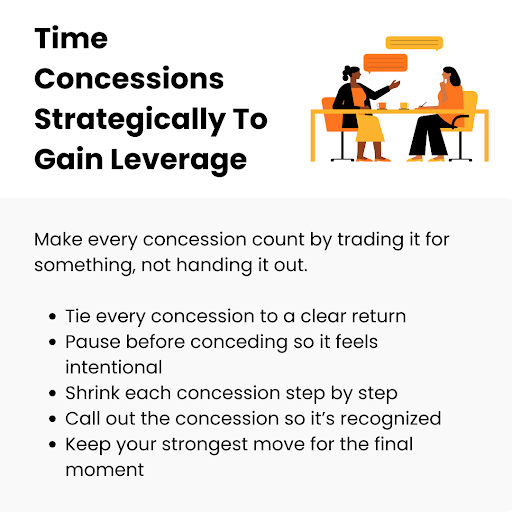
Giving in too quickly feels nice in the moment – and costs you later. Every time you drop your price or add something extra without a reason, you train the key stakeholders at the negotiating table to ask for more.
You are basically telling them that this was flexible all along. Instead, concessions should be an exchange, not a giveaway. And each one should do something for you.
Do This:
- Never give something away without getting something back. It can be small, but it matters
- Delay your concessions slightly so they feel considered – not automatic
- Make each concession smaller than the last – It shows you are reaching your limit
- Say it out loud when you concede so it doesn’t go unnoticed (“What I can do is…”)
6. Apply The “Door-In-The-Face” Strategy
This one is subtle – but in a smart way. You start with a bigger ask than you expect to get. Not ridiculous – just higher than your real target. When they push back (which they probably will), you step down to your actual goal. Now your real offer feels reasonable – even generous. And it works because people naturally respond to perceived compromise.
Do This:
- Make sure your first ask is still believable – don’t destroy trust
- Expect the “no” and don’t react emotionally to it
- Transition smoothly to your real offer, as if it were a genuine adjustment
- Slightly soften your tone on the second ask to reinforce that you are meeting them halfway
7. Reinforce The Cost Of Inaction For The Buyer
Sometimes the biggest competitor in a deal isn’t another vendor – it is doing nothing. And doing nothing feels safe. Your job is to make “staying the same” feel less comfortable than moving forward. Because once they see what inaction is costing them, delay becomes harder to justify.
Do This:
- Ask questions that reveal hidden costs (“What happens if this stays the same for another year?”)
- Help them put a rough number or impact on the problem – even estimates work
- Share patterns you have seen with others in similar situations (without sounding preachy)
- Keep it calm and factual – urgency works better without pressure
8. Document Negotiated Agreements Immediately To Avoid Misunderstandings
That “we are aligned” feeling at the end of a call is fragile. Leave it undocumented, and suddenly, details get mixed up. People remember things differently. Priorities shift. Momentum disappears.
Writing things down is how you protect the deal. And it quietly shows professionalism and helps manage your reputation better, because people see you as someone who is clear and easy to work with.
Do This:
- Send a quick written summary right after the conversation – not hours later
- Keep it simple and structured so it is easy to scan and confirm
- Confirm mutual understanding (“Just to make sure we’re aligned…”) before finalizing
- End with next steps and timing so the deal keeps moving
9. Trade Non-Monetary Terms Instead Of Discounts
Discounting is the easiest move in sales and negotiation – and usually the most damaging. It reduces your value without necessarily increasing commitment. A smarter approach is to trade things that matter to the buyer but cost you little – timelines, support levels, favorable payment terms, added features. It builds long-term relationships and gets you repeat business.
Do This:
- Ask what matters most to them beyond cost – you will usually find something usable
- Offer things that are high value to them but low cost to you (timing, support, structure)
- Package these as thoughtful adjustments, not last-minute sweeteners
- Keep your pricing steady so your value doesn’t look negotiable
4 Common Sales Negotiation Mistakes That Reduce Deal Value
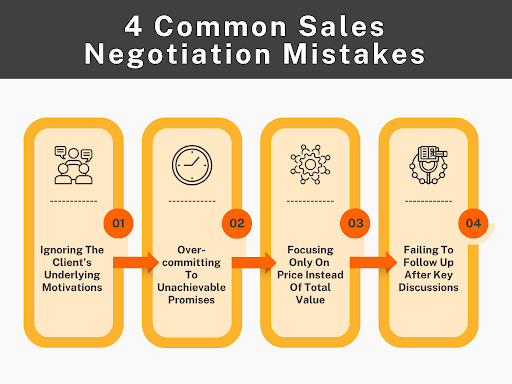
Here are 4 common sales negotiation mistakes that show up often and cost sales professionals more than they realize.
1. Ignoring The Client’s Underlying Motivations
This one is subtle. The potential customer says they want something – better pricing, faster turnaround, more features. And you jump straight into solving that. But what they said is usually just the basic version. Underneath, there is pressure or a personal win they are after. If you miss that, your offer can be technically correct but emotionally flat.
How To Fix: Don’t move too fast into solution mode. Pause and gently dig one step deeper by asking what is driving that request or why it matters for negotiation success right now. Even a small shift in understanding can completely change how you position your response.
2. Overcommitting To Unachievable Promises
It usually happens in a rush. The deal feels close. Energy is high. And you start agreeing to things just to keep momentum going. “Yeah, we can do that.” In the moment, it looks like progress. Later, it turns into pressure and awkward conversations you could have avoided.
How To Fix: Give yourself space before committing. If something looks even slightly off, say you will confirm rather than instantly agreeing. It is far better to slightly disappoint early than seriously disappoint later.
3. Focusing Only On Price Instead Of Total Value
When price becomes the main topic, you have already lost some control. It reduces everything you are offering to a single number. And this makes comparison easy and differentiation almost impossible. That is when buyers start pushing for cuts.
How To Fix: Widen the lens before narrowing it again. Bring the discussion back to what this changes for them. Price becomes less isolated and less negotiable when value becomes clearer.
4. Failing To Follow Up After Key Discussions
You have a great call. Both sides seem aligned, and then… nothing. No follow-up, no next step. That gap creates uncertainty. And uncertainty slows everything down or quietly kills the deal altogether.
How To Fix: Treat the end of a conversation as the start of the next step. Send a short and clear follow-up while everything is still fresh.
4 Real Examples Of Successful Sales Negotiations You Can Learn From
These 4 examples walk through situations where smart sales negotiation strategies changed the outcome completely.
1. Pergola Kits USA

At Pergola Kits USA, a homeowner came in ready to compare prices across 3 suppliers for a patio cover. The conversation started exactly where you would expect – square footage, materials, total cost. It was heading straight toward a price comparison.
Instead of staying there, the rep pulled up a past customer project with a nearly identical backyard layout. Same dimensions, same weather exposure, same install constraints. He walked the buyer through what that customer originally wanted and what they were glad they upgraded after installation.
Then he shifted the conversation to long-term use. Shade coverage during peak sun hours. Structural durability through seasonal changes. Maintenance effort over time. The buyer started talking less about price and more about “getting it right the first time.”
By the end, the buyer chose a higher-priced kit with upgraded materials – not because it was pushed, but because it felt like the safer and smarter decision based on someone else’s real outcome.
2. EXT Cabinets
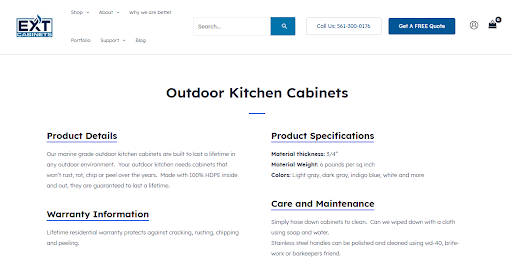
A contractor was sourcing outdoor kitchen cabinets from EXT Cabinets for a client project and pushed hard on bulk pricing. The expectation was simple: larger order, lower cost per unit.
Rather than immediately adjusting pricing, the sales rep asked about the full project timeline and install sequence. Turns out, the contractor was working across multiple properties with staggered deadlines, not a single install.
The rep reframed the deal around delivery coordination. He offered:
- Split shipments aligned with each project phase
- Pre-labeled units for faster installation
- Direct-to-site delivery to avoid double handling
That changed the conversation completely. The contractor realized the time saved on logistics and labor would outweigh a small price difference. The order closed at near-original pricing, with the contractor committing to future projects because the process made his job easier.
3. IceCartel

A buyer was looking at one of IceCartel’s high-ticket iced-out watches, but kept circling back to the price. The hesitation wasn’t about affordability – it was about confidence. He wasn’t fully sure if the piece would hold up in terms of quality and presence.
The rep didn’t jump into discounts or specs. Instead, he shifted to social proof in a very direct way. He showed real customer videos – unfiltered clips of buyers wearing the exact model in everyday settings. Close-ups, wrist shots, natural lighting.
Then he walked through how the watch actually feels when worn – weight, fit, attention it draws. The buyer started reacting to the experience, not the price.
Within minutes, the tone changed. The buyer stopped negotiating and asked about shipping timelines instead. The deal closed at full price because the hesitation was removed, not negotiated down.
4. CodaPet

A pet owner reached out to CodaPet for in-home euthanasia services and immediately focused on cost. The situation was emotional, and the conversation could have easily stayed transactional.
Instead, the rep slowed everything down. He didn’t rush into pricing or packages. He asked about the pet – age, condition, how things had been over the past few days. The tone of the call shifted from “service inquiry” to a real conversation.
Then he explained how the process would take place at home, step by step. What the environment would feel like. How the pet would be kept comfortable. What the owner could expect during and after.
By the time pricing came up again, it wasn’t the main concern anymore. The owner chose a more comprehensive package that included aftercare services, not because it was upsold, but because it felt like the right way to handle a difficult moment.
Conclusion
The takeaway is simple. Use these sales negotiation techniques as small adjustments. Stop trying to “win” the business negotiation. Focus on holding your ground at the negotiation table without making it a big deal. Let the conversation breathe. Let the other person lean in. The less you force it, the more control you keep.
Many sales calls start well, but the moment you want to show something, the sales process slows down. With CrankWheel’s screen sharing tool, you can remove that friction completely. During a call, you simply send your prospect a link by text or email, and they can see your screen within seconds on any device, even their phone, without downloading anything.
We also built features that keep buyers involved during the conversation. You can see how engaged someone is while they watch, let them take control to fill in forms, or send quick sales videos and track when people watch them later.
Get started with CrankWheel for free and see how quickly a simple screen share can turn a sales call into a closed deal.
About The Author:
Burkhard Berger is the founder of Novum™. He helps innovative B2B companies implement modern SEO strategies to scale their organic traffic to 1,000,000+ visitors per month. Curious about what your true traffic potential is?